
Microsoft Dynamics 365 Business Central and Field Service Implementation Rescue for Medical Imaging
How MIS Healthcare Brought in Dynamics Square to Stabilise a Stalled Business Central and Field Service Project and Get It Back on Track for Go-Live
 MIS Healthcare
A Crux of the Case Story
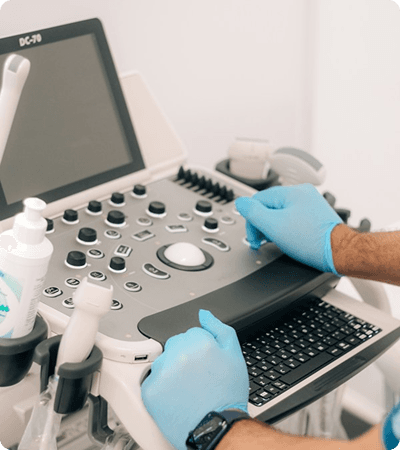
MIS Healthcare, a UK medical imaging business and a leading European reseller of Samsung medical imaging equipment, was part-way through a Business Central and Field Service implementation that had stalled. Business Central was around 90% complete and Field Service around 80%, but unreliable integrations had halted user acceptance testing. Dynamics Square was brought in to assess the project technically and set out a structured rescue plan to reach go-live.
Business Overview
MIS Healthcare sells, installs and maintains medical imaging equipment, and provides clinical training to the healthcare teams that use it. The business operates through two UK trading companies and employs around 190 people.
The company was moving from a family-owned model to private-equity-backed growth. Its legacy systems, Sage Line 50 for finance and a bespoke tool for field engineering, could not support that scale.
After a full tender, MIS Healthcare selected a partner to implement Microsoft Dynamics 365 Business Central with Dynamics 365 Field Service, connected through Power Automate and Azure Logic Apps. Third-party apps covered warehouse scanning, document capture and bank feeds.
Around 90 to 100 people were expected to use the system: 50 to 60 field engineers and 40 to 45 back-office staff. Production, test and development environments were in place, and licences had been bought.
Despite that progress, the project had stalled. Integration failures between Business Central and Field Service stopped user acceptance testing, and users were taken off the project. With the NHS year-end peak approaching, the business needed a reliable route to go-live.
What are The
Business Challenges
The organisation needed an independent view of what could be saved and a credible plan to reach go-live.
What the Business Needed
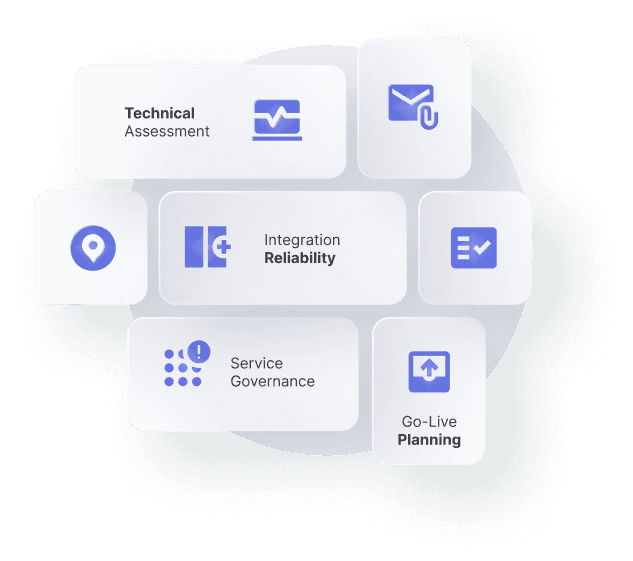
- A technical assessment of the existing Business Central and Field Service build.
- A clear decision on rescue versus a fresh implementation.
- Reliable integrations for stock, serial numbers and billing.
- A restart of user acceptance testing with confidence.
- Strong combined expertise in Business Central, Field Service and Power Platform.
- Transparent governance and service levels.
- A go-live plan that avoided the April peak.
- A long-term support model after go-live.
The priority was reliability over cost: a system the business could trust from day one.
Business Objectives
MIS Healthcare set clear objectives for the rescue:
Assess the integration approach, environment setup, flows and Logic Apps.
Decide whether to stabilise the current build or re-implement.
Stabilise the Business Central and Field Service integration.
Complete outstanding approvals, personalisation and reports in Business Central.
Restart and complete user acceptance testing.
Go live early in the new year, before the NHS year-end peak.
Put long-term support, governance and service levels in place.
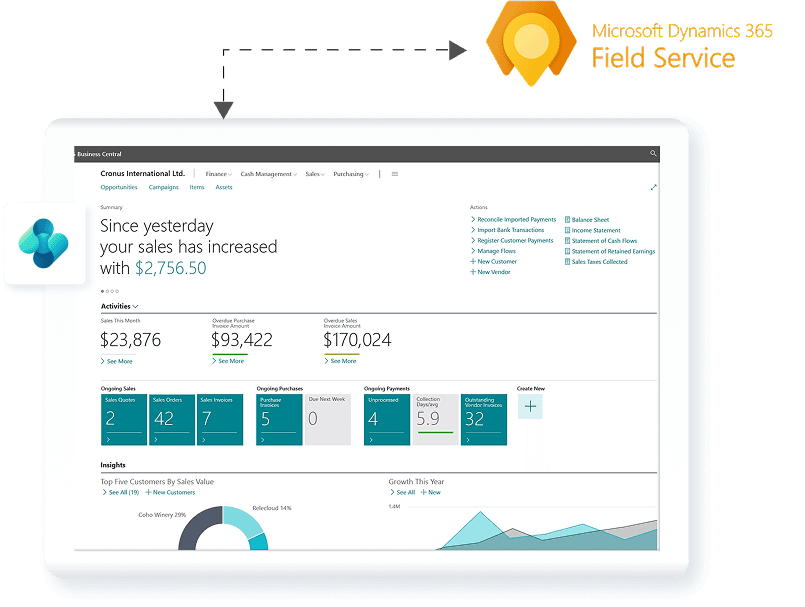
Solutions Proposed by Dynamics Square
Dynamics Square’s approach was assessment first, rescue second. Rather than restarting the project, a senior solution architect reviewed what had already been built and identified exactly what was needed to make it reliable.
Phase 1: Technical Discovery and Assessment
- Ran a technical discovery session with the MIS Healthcare project team.
- Reviewed the integration design, environment setup, Power Automate flows and Logic Apps.
- Assessed the Business Central configuration, data migration and outstanding work.
- Recommended whether to stabilise the existing build or re-implement.
Integration Stabilisation
- Focused on the three failing areas: stock synchronisation, serial number tracking and billing flows.
- Reworked unreliable flows between Business Central and Field Service.
- Validated the integrations across production, test and development environments.
Business Central Completion
- Completed outstanding approval workflows, personalisation and reports.
- Validated the final data migration.
- Confirmed third-party apps, including Tasklet, Continia and bank feeds, worked with the stabilised setup.
Testing and Go-Live Planning
- Restarted user acceptance testing with a clear test plan.
- Scheduled go-live around team availability and the NHS year-end peak.
Governance and Long-Term Support
- Set up transparent project governance and reporting.
- Agreed service levels for post-go-live support.
- Provided a long-term support model for Business Central, Field Service and Power Platform.
Results and Impact: What This Transformation Means
The rescue gave MIS Healthcare an independent, evidence-based path from a stalled project to a working system.
The existing investment in Business Central and Field Service was assessed rather than written off.
The root causes of integration failures were identified.
Stock, serial tracking and billing flows have a clear stabilisation plan.
User acceptance testing has a defined restart plan.
Go-live is scheduled around the NHS year-end peak.
Governance and service levels are in place for the long term.
Why This Case Matters and Future Prospects

Consult To Reveal Best Approach
Connect with us to facilitate your system to drive a parallel approach in the market you deal with. We help enterprises to implement their unique needs.