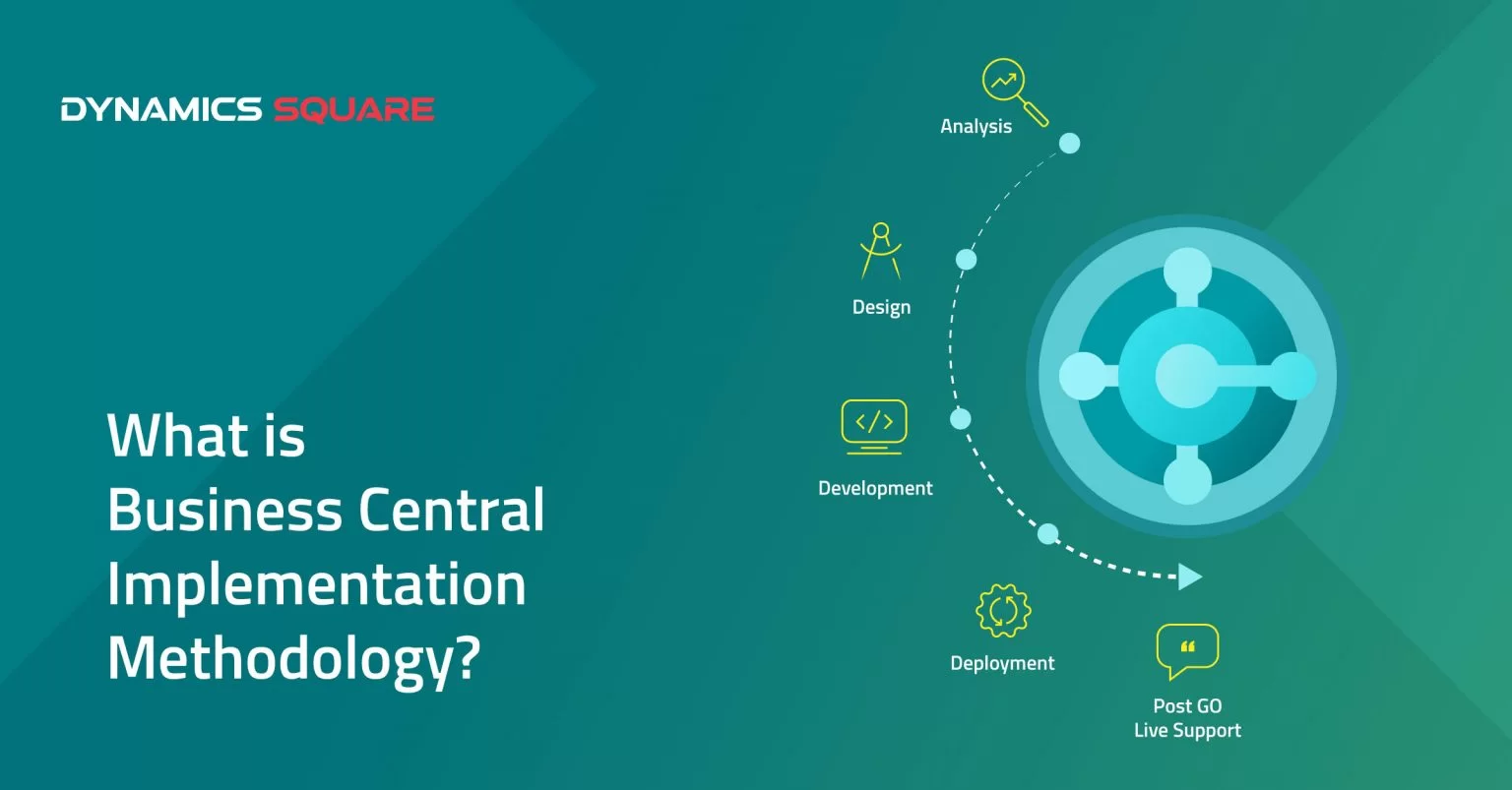
Business Central implementation methodology is the structured approach used to plan, configure, test, deploy, and optimise Microsoft Dynamics 365 Business Central for an organisation. A clear methodology helps businesses move from initial requirements to a controlled go-live while managing data, integrations, users, testing, risks, and change.
Choosing an ERP is only one part of a transformation project. The implementation approach determines how effectively the new system supports existing processes, where improvements can be introduced, and how prepared users are when the system goes live.
Table of Contents
- Key Takeaways
- What is Business Central Implementation Methodology?
- Why Does Business Central Implementation Methodology Matter?
- Business Central Implementation Lifecycle
- Business Central Implementation Methodology: Key Phases
- Which Business Central Implementation Methodology Should You Use?
- What Should a Good Business Central Implementation Methodology Include?
- Common Business Central Implementation Methodology Mistakes
- How to Choose a Business Central Implementation Partner
- Business Central Implementation Methodology Checklist
- Need Help Planning Your Business Central Implementation?
- Some Business Central Implementation Methodology FAQs
- Final Thoughts
- Related Business Central Resources
This guide explains the Business Central implementation process, the major implementation phases, common methodologies, data migration, testing, training, go-live, post-go-live optimisation, and the questions businesses should ask an implementation partner.
Key Takeaways
- Business Central implementation methodology provides a structured framework for planning, designing, testing, deploying, and optimising Business Central.
- A typical implementation lifecycle includes discovery, requirements gathering, solution design, configuration, data migration, testing, training, go-live, and post-go-live optimisation.
- Data migration and integration requirements should be identified early rather than being treated as final-stage activities.
- User acceptance testing (UAT) helps business teams validate Business Central against real-world processes before go-live.
- The right methodology can be Agile, Waterfall, or Hybrid, depending on project scope, requirements, governance, and business needs.
- Successful implementation requires more than technical configuration; user training, change management, project governance, and post-go-live support are also important.
- Businesses should evaluate an implementation partner based on its methodology, requirements process, migration experience, testing approach, training, and ongoing support.
What is Business Central Implementation Methodology?
A Business Central implementation methodology is a repeatable framework for taking an organisation from business requirements through solution design, configuration, migration, testing, deployment, and ongoing improvement.
Rather than treating implementation as a single software installation, a structured methodology connects the technical work with business objectives. It defines what should happen at each stage, who is responsible, what needs to be validated, and when the project is ready to move forward.
A typical Dynamics 365 Business Central implementation methodology considers:
- Business objectives and requirements
- Current and future business processes
- Solution design
- Business Central configuration
- Data migration
- Integrations and extensions
- Security and user roles
- Testing and user acceptance testing
- User training and change management
- Go-live and cutover
- Post-go-live support
Why Does Business Central Implementation Methodology Matter?
ERP projects affect finance, sales, purchasing, inventory, operations, management, and other teams. Without a defined implementation approach, important requirements can be missed or discovered too late in the project.
A robust methodology can help an organisation:
- Define project scope clearly
- Prioritise business requirements
- Reduce avoidable implementation risks
- Keep stakeholders involved
- Control configuration and customisation
- Prepare data before migration
- Validate integrations
- Test end-to-end business processes
- Prepare users for the new system
- Establish clear go-live criteria
- Plan post-go-live improvements
The methodology should therefore be selected around the organisation's requirements rather than simply following a fixed template.
Business Central Implementation Lifecycle
A practical Business Central implementation framework can be organised into the following lifecycle:
- Discovery and assessment
- Requirements gathering
- Implementation planning
- Solution design
- Configuration and development
- Data migration
- Integration
- Testing and UAT
- Training and change management
- Go-live preparation
- Go-live
- Post-go-live support and optimisation
Some stages may overlap. For example, training can begin during configuration and testing rather than being left entirely until the end.
Business Central Implementation Methodology: Key Phases
1. Discovery and Assessment
The first phase is to understand the organisation before making significant configuration decisions.
The project team should review the current ERP or accounting environment, business processes, operational challenges, reporting requirements, integrations, data, users, and future objectives.
Discovery workshops may involve finance, sales, purchasing, warehouse, manufacturing, operations, IT, and management stakeholders.
The output should be a clear understanding of the business problem, desired outcomes, project scope, and areas that require further investigation.
2. Requirements Gathering
Requirements gathering turns business needs into documented implementation requirements.
Each requirement should ideally be classified according to whether it can be handled through standard Business Central functionality, configuration, an extension, an integration, or another solution.
Useful questions include:
- What process is being performed today?
- What problem exists with the current process?
- What should the future process look like?
- Which Business Central functionality can support it?
- Does the requirement require an integration or extension?
- How will the requirement be tested?
- Which users need to approve the result?
This approach helps prevent unnecessary customisation simply because an existing legacy process is familiar.
3. Business Central Implementation Planning
Once requirements are understood, the team can create a detailed Business Central implementation plan.
The plan can include:
- Project scope
- Project objectives
- Implementation phases
- Milestones
- Project responsibilities
- Dependencies
- Data migration activities
- Integration activities
- Testing strategy
- Training plan
- Go-live criteria
- Support arrangements
Project governance should also define how risks, decisions, issues, scope changes, and approvals will be managed.
4. Solution Design
Solution design translates requirements into a workable Business Central solution.
The implementation team maps business processes to Business Central functionality and identifies any gaps that require additional configuration, extensions, integrations, or process changes.
For example:
Order-to-cash: sales order → shipment → invoice → payment → reconciliation.
Procure-to-pay: purchase order → receipt → supplier invoice → payment.
Solution design should also consider security, roles, workflows, reporting, integrations, data, and future scalability.
5. Configuration and Development
Once the design is approved, Business Central can be configured to support the agreed processes.
Depending on scope, configuration may cover:
- Financial management
- Sales and purchasing
- Inventory
- Warehouse management
- Supply chain processes
- Manufacturing
- Projects
- Fixed assets
- Approval workflows
- Dimensions
- User roles and permissions
- Reporting
The recommended approach is generally to use standard functionality where it meets the requirement and introduce additional development only when there is a justified business need.
6. Data Migration
Business Central data migration should be planned as part of the implementation rather than treated as a last-minute technical task.
Legacy data may contain duplicates, inactive records, inconsistent formats, or information that is no longer required. Moving all available data without assessment can increase complexity in the new system.
A structured migration approach typically includes:
- Identify the data required for the new system.
- Assess the quality of the legacy data.
- Clean and standardise the data.
- Map legacy fields to Business Central fields.
- Transform data where required.
- Import the data.
- Validate the migrated records.
- Repeat migration testing before final cutover.
Potential migration areas include customers, vendors, items, chart of accounts, dimensions, inventory, opening balances, open transactions, and selected historical information. See Also - NAV to Business Central Data Migration – Your Major Concern Explained
7. Integrations and Extensions
Business Central often operates as part of a wider technology environment. An implementation methodology should therefore identify integrations early.
Potential connected systems can include:
- CRM platforms
- eCommerce platforms
- Banking and payment systems
- Warehouse applications
- Payroll systems
- Microsoft 365
- Power BI
- Power Apps
- Third-party business applications
For each integration, the project team should define which system owns the data, what information is exchanged, when synchronisation occurs, how failures are handled, and who is responsible for ongoing maintenance. See Also - A Quick Guide to Dynamics 365 Business Central Integration.
8. Testing and User Acceptance Testing
Testing validates whether the Business Central solution works as intended before production use.
A mature Business Central implementation methodology should include multiple levels of testing, including:
- Functional testing
- System testing
- Integration testing
- Data migration testing
- Security testing
- Regression testing
- User acceptance testing
What Is User Acceptance Testing?
User acceptance testing, or UAT, allows business users to validate the configured solution against realistic business scenarios.
For example, finance users can test a complete process from transaction entry through invoicing, payment, reconciliation, and reporting. Warehouse users can test purchasing, receiving, inventory movement, and fulfilment.
UAT should produce documented feedback and approval before the project moves towards final go-live.
9. Training and Change Management
An ERP implementation changes how employees complete daily tasks. Training and change management are therefore important components of the implementation lifecycle.
Training can be organised around user roles, including:
- Finance teams
- Sales teams
- Purchasing teams
- Warehouse users
- Manufacturing users
- Managers
- System administrators
Using real business scenarios during training can make the transition easier because users can see how Business Central applies to their daily responsibilities.
10. Go-Live Readiness
Before deployment, the project team should confirm that the organisation is ready to operate in the new environment.
A Business Central implementation checklist can include:
- Configuration completed
- Required development completed
- Data migration validated
- Integrations tested
- UAT completed
- Critical issues resolved
- User access confirmed
- Users trained
- Opening balances validated
- Cutover plan approved
- Support process confirmed
11. Go-Live and Cutover
Go-live moves the organisation from the implementation or testing environment into production operations.
The cutover can involve final data migration, production configuration checks, integration activation, user access verification, and validation of critical business processes.
Clear responsibilities and timing are important because multiple activities may need to happen in a specific sequence.
12. Post-Go-Live Support and Optimisation
The implementation lifecycle continues after go-live. Users may identify questions, process issues, reporting requirements, or opportunities for improvement once the system is used in day-to-day operations.
Post-go-live activities can include:
- User support
- Issue resolution
- Configuration adjustments
- Reporting improvements
- Additional training
- Integration monitoring
- Process optimisation
- Future automation
For ongoing assistance, see our Business Central support services.
Which Business Central Implementation Methodology Should You Use?
Different organisations can use different project delivery approaches. The appropriate methodology depends on project size, requirements, governance, internal resources, risk tolerance, and how much the solution is expected to evolve during implementation.
Waterfall Methodology
A waterfall approach follows a relatively sequential project structure. Requirements and design are established before configuration, testing, and deployment progress.
It can work well when requirements are stable, the scope is clearly defined, and strong stage-by-stage governance is required.
Agile Methodology
An agile approach delivers work in iterative cycles. Configuration, development, demonstrations, testing, and feedback can happen repeatedly throughout the project.
This can be useful where users need to see the solution early and requirements may evolve as the project progresses.
Hybrid Methodology
A hybrid approach combines structured project governance with iterative delivery. The project can have defined milestones and scope controls while allowing configuration and feedback to happen in manageable cycles.
For many ERP projects, the practical question is not whether one methodology is universally superior. It is whether the chosen approach provides enough control while allowing the project team and users to learn and adapt.
What Should a Good Business Central Implementation Methodology Include?
A strong methodology should provide visibility across the full project lifecycle.
At minimum, it should address:
- Scope: What is included and excluded?
- Requirements: What does the business need?
- Solution design: How will the requirements be delivered?
- Data: What information needs to be migrated?
- Integrations: Which external systems need to connect?
- Testing: How will the solution be validated?
- Training: How will users become confident with the system?
- Governance: How will risks, decisions, and changes be managed?
- Go-live: What criteria must be met before deployment?
- Support: How will issues and improvements be handled after launch?
Common Business Central Implementation Methodology Mistakes
Starting Configuration Before Requirements Are Clear
Beginning configuration without understanding the business can lead to rework and inconsistent decisions.
Trying to Copy Every Legacy Process
A new ERP implementation is an opportunity to review processes rather than automatically reproduce inefficient legacy workflows.
Leaving Data Migration Until the End
Migration requirements should be identified early because data quality and mapping can affect configuration and testing.
Underestimating Testing
Testing only individual functions can miss issues that occur when multiple processes interact. End-to-end scenario testing is important.
Training Users Too Late
Users can provide valuable feedback during configuration and UAT. Involving them early can support adoption.
Ignoring Post-Go-Live Planning
Support requirements should be established before launch rather than after the first production issue occurs.
How to Choose a Business Central Implementation Partner
The implementation partner can have a significant influence on project delivery. Instead of asking only about software experience, businesses should ask how the partner manages the implementation lifecycle.
Useful questions include:
- What Business Central implementation methodology do you follow?
- How do you gather and document requirements?
- How do you decide between standard functionality and customisation?
- How do you manage data migration?
- How do you test integrations?
- How do business users participate in UAT?
- How do you manage project scope and changes?
- What are your go-live readiness criteria?
- What training do you provide?
- What support is available after go-live?
These questions can help distinguish a partner that simply configures software from one that follows a structured approach to business transformation.
Business Central Implementation Methodology Checklist
Use this checklist when reviewing your implementation approach:
- Business objectives documented
- Current processes reviewed
- Future processes defined
- Requirements documented and prioritised
- Project scope agreed
- Implementation methodology selected
- Solution design approved
- Configuration plan created
- Customisation requirements assessed
- Data migration strategy defined
- Integration requirements documented
- Testing strategy established
- UAT scenarios prepared
- User training planned
- Go-live criteria defined
- Cutover plan prepared
- Post-go-live support arranged
Need Help Planning Your Business Central Implementation?
If you are evaluating Business Central and need help defining the right implementation approach, a structured discovery and assessment can help identify your requirements, processes, data migration needs, integrations, and project priorities.
Some Business Central Implementation Methodology FAQs
1. What is Business Central implementation methodology?
Business Central implementation methodology is the structured framework used to plan, design, configure, test, deploy, and support Microsoft Dynamics 365 Business Central.
2. What are the main phases of Business Central implementation?
The main phases typically include discovery, requirements gathering, planning, solution design, configuration, data migration, integrations, testing, training, go-live preparation, deployment, and post-go-live support.
3. What is the Business Central implementation process?
The Business Central implementation process takes an organisation from initial requirements and solution design through configuration, migration, testing, training, go-live, and optimisation.
4. Which methodology is better for Business Central: Agile or Waterfall?
Neither methodology is universally better. The appropriate approach depends on project scope, requirements, governance, internal resources, and how much flexibility is required during implementation. A hybrid approach can combine structured governance with iterative delivery.
5. How important is data migration in Business Central implementation?
Data migration is a critical implementation activity. Businesses should identify required data, assess its quality, map legacy fields, test imports, and validate migrated information before go-live.
6. When should Business Central testing begin?
Testing should be planned early and performed throughout implementation as appropriate. Formal user acceptance testing should take place after the relevant configuration, data, and integrations are sufficiently ready for business validation.
7. Why is user training important in Business Central implementation?
Training helps users understand new processes and perform their responsibilities confidently. Involving users during configuration and UAT can also provide useful feedback before go-live.
8. What should I ask a Business Central implementation partner?
Ask about their methodology, requirements process, data migration approach, testing and UAT, integrations, project governance, training, go-live process, and post-go-live support.
Final Thoughts
A successful Business Central implementation methodology should connect business objectives with practical project delivery. Discovery, requirements, solution design, configuration, data migration, integrations, testing, training, go-live, and support should work together as one implementation lifecycle.
The right approach is not simply about getting Business Central live. It is about creating a solution that users can adopt, business processes can rely on, and the organisation can continue to improve.
If you are considering Business Central and want to understand which implementation approach fits your requirements, speak with a Business Central specialist about your project.