
Microsoft Dynamics 365 Finance Implementation Optimisation
How Bertling Group Strengthened Financial Control and Prepared for a Multi-Entity Rollout with Microsoft Dynamics 365 Finance
 Bertling Group
A Crux of the Case Story
This case story shows the challenges encountered by Bertling Group, a global logistics organisation already operating on Microsoft Dynamics 365 Finance. These challenges included user adoption, reporting, and configuration. With growing pressure to standardise operations across entities, the business took a structured approach to stabilise its UK finance function first. By focusing on correct implementation, localisation, and training, it began building a reliable foundation for broader global rollout.
Business Overview
Bertling Group is a global logistics business headquartered in Germany, managing a network of 30 legal entities covering multiple regions. It necessitates a high degree of consistency and accuracy in financial processes, as its operations encompass international transport, coordination, and financial administration across multiple geographies.
The organisation had already implemented Microsoft Dynamics 365 Finance through its internal technical team, which was situated in Germany. Despite the fact it provided a central system, the implementation did not completely meet operational expectations, particularly in areas such as user adoption, configuration, and reporting.
The organisation utilised a variety of supporting applications in addition to its ERP system. These consisted of an in-house transport management system, document management tools for accounts payable automation, expense management software, and tax filing solutions. Internally, these systems were integrated.
The necessity of a more structured and consistent distribution approach became apparent as the business continued to expand, beginning with the UK entity.

What are The
Business Challenges
Despite having a modern ERP platform in place, the organisation faced several challenges that affected day-to-day operations and long-term scalability.
What the Business Needed
To move forward, the organisation required a more structured and reliable approach to ERP deployment, starting with its UK operations.
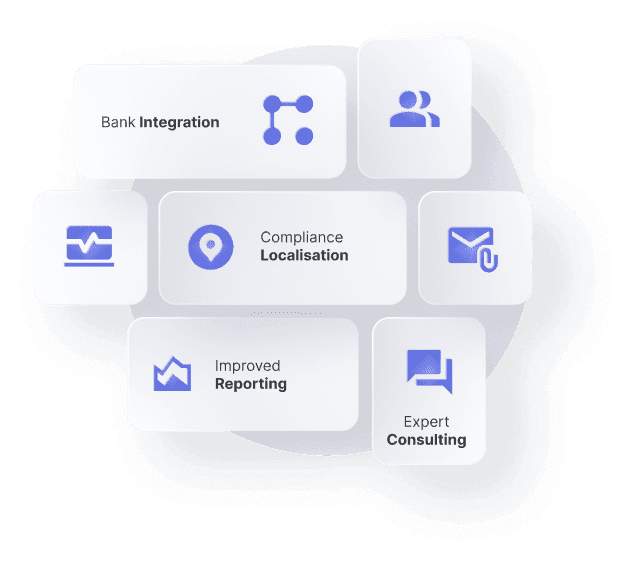
- A properly configured Dynamics 365 Finance setup for the UK entity, focused on the finance module
- Localisation to meet UK financial regulations and compliance requirements
- Integration with banking systems to streamline financial transactions
- A clear implementation plan aligned with a defined go-live timeline
- Comprehensive user training to improve adoption and confidence
- Improved reporting capabilities to support financial analysis and decision-making
- Expert consulting support to guide both current implementation and future global rollouts
- A controlled approach to running systems in parallel during transition
The goal was not to replace the system, but to get it to perform well.
Business Objectives
The leadership team aligned on practical objectives that would ensure both immediate improvement and long-term scalability.
Successfully implement Dynamics 365 Finance for the UK entity with a go-live target of December 30, 2025
Ensure full localisation to comply with UK financial and regulatory requirements
Equip six UK finance users with the skills and confidence to use the system effectively
Address gaps in training and reporting from the initial implementation
Stabilise financial operations before expanding to additional entities
Prepare the system for future rollouts across other regions
Enable parallel system operation during transition to minimise disruption
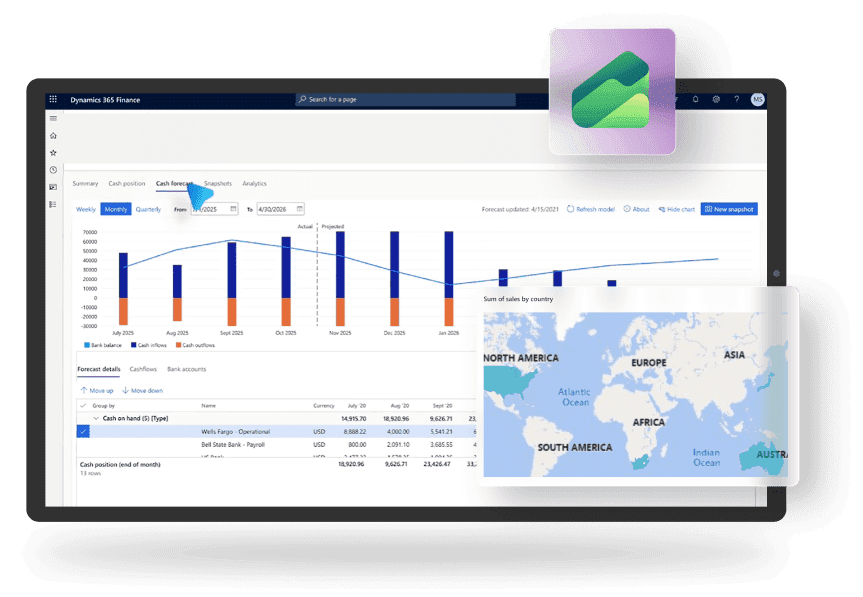
Solutions Proposed by Dynamics Square
Dynamics Square approached the engagement with a focus on stabilising the current system while preparing it for future expansion, with an emphasis on standardising core financial processes and creating a consistent operational framework across entities.
Phase 1: UK Entity Finance Implementation
- Deployment of Dynamics 365 Finance for the UK entity, focused on finance modules
- Localisation of the system to align with UK financial regulations
- Configuration of financial processes to ensure accuracy and compliance
- Targeted go-live date set for December 30, 2025
Global Governance & Global Rollout Strategy
- Establishment of a Global Blueprint to standardise core financial and operational processes across entities, effectively creating a consistent “financial DNA” across the organisation
- Design of a scalable rollout framework that ensures consistency while allowing for regional flexibility
- Localisation readiness for future rollouts, including:
- US operations with Sales Tax and Nexus requirements
- Indonesia operations with local tax regulations and Faktur Pajak compliance
- Governance model to align headquarters oversight with regional execution, ensuring both control and adaptability
User Training and Adoption Support
- Comprehensive training for six UK finance users across London, Aberdeen, and Middlesbrough
- Focused sessions to address existing gaps in system understanding
- Practical guidance to improve confidence in day-to-day system usage
System Integration and Alignment
- Continued integration with existing applications, including in-house transport systems and third-party tools
- Alignment of financial processes across systems to ensure consistency
- Support for bank integration to improve transaction management
Consultative Support for Global Rollout
- Advisory support to guide future rollouts across additional regions
- Assessment of system readiness for expansion into entities beyond the UK
- Focus on improving configuration standards for consistency across all entities
Results and Impact: What This Transformation Means
This phase of the project is designed to deliver stability, clarity, and readiness for broader transformation.
A structured and localised finance system for the UK entity
Improved user confidence through targeted training and support
Better alignment between system configuration and business requirements
Enhanced reporting capabilities to support financial visibility
Stronger foundation for future multi-entity rollout
Reduced risk during transition through planned parallel system operation
Why This Case Matters and Future Prospects

Consult To Reveal Best Approach
Connect with us to facilitate your system to drive a parallel approach in the market you deal with. We help enterprises to implement their unique needs.