
Selecting the right ERP solution for manufacturing can directly influence production efficiency, inventory accuracy, profitability, and long-term business growth. As manufacturers deal with rising operational costs, supply chain disruptions, labour shortages, and increasing customer expectations, relying on spreadsheets or disconnected software is no longer sustainable.
Modern manufacturing ERP software provides a single source of truth for production planning, inventory management, procurement, warehousing, finance, and quality control. With real-time operational visibility, manufacturers can reduce waste, improve on-time delivery, optimise resource utilisation, and make faster, data-driven decisions.
Table of Contents
- What Is ERP for Manufacturing?
- Why Manufacturers Need ERP Solutions
- 13 Best ERP Solutions for Manufacturing Businesses in the UK 2026
- Common Manufacturing Challenges ERP Solves
- Key Features Every Manufacturing ERP Should Include
- How to Choose the Right ERP Solution for Manufacturing
- Why Microsoft Dynamics 365 Business Central is a Strong Choice for UK Manufacturers
- Manufacturing ERP Comparison Table
- Why Choose Dynamics Square UK for Manufacturing ERP?
- Some FAQs for Manufacturing ERP Software
- Final Thoughts
The challenge, however, is choosing the right solution. The ERP market offers dozens of options, each designed for different business sizes, industries, and manufacturing models. Understanding your operational requirements is essential before making an investment.
In this guide, we'll explore the leading ERP solutions for manufacturing, compare their capabilities, and explain what businesses should consider before selecting an ERP platform that supports future growth.
What Is ERP for Manufacturing?
ERP for Manufacturing is an enterprise resource planning system specifically designed to help manufacturers manage every stage of production—from purchasing raw materials to delivering finished products.
Instead of using separate software for inventory, production planning, purchasing, finance, warehousing, and sales, a manufacturing ERP system centralises all business data into one platform.
This gives every department access to the same real-time information, improving collaboration, reducing manual work, and eliminating data silos.
A manufacturing ERP typically manages:
- Production Planning
- Material Requirements Planning (MRP)
- Bill of Materials (BOM)
- Routing
- Shop Floor Control
- Inventory Management
- Warehouse Management
- Procurement
- Supply Chain Management
- Sales & Customer Management
- Finance & Accounting
- Quality Management
- Demand Forecasting
- Production Scheduling
- Cost Tracking
- Business Intelligence & Reporting
Rather than reacting to operational problems after they occur, manufacturers gain complete visibility into production and can proactively resolve issues before they impact delivery schedules or profitability.
Why Manufacturers Need ERP Solutions
Manufacturing is becoming increasingly complex.
Businesses today must manage:
- Rising material costs
- Labour shortages
- Supply chain disruptions
- Increasing customer expectations
- Regulatory compliance
- Multi-site operations
- Product traceability
- Faster delivery requirements
Without a modern ERP platform, manufacturers often rely on disconnected systems, manual spreadsheets, and outdated software that slows decision-making.
An integrated ERP solution for manufacturing helps organisations overcome these challenges by providing one connected platform for the entire business.
Instead of departments working independently, ERP connects finance, purchasing, warehousing, production, quality control, logistics, and sales into a single ecosystem.
This improves visibility, communication, and operational efficiency across the business.
13 Best ERP Solutions for Manufacturing Businesses in the UK 2026
We The UK market offers several ERP solutions designed to support manufacturing organisations. However, each platform has different strengths depending on business size, industry, complexity, and operational requirements.
Below are some of the leading ERP solutions for manufacturing businesses:
- Dynamics 365 Business Central
- Odoo ERP
- Acumatica ERP
- Oracle Netsuite ERP
- SAP Business One
- Epicor Kinetic ERP
- IFS ERP Solution
- SYSPRO
- QAD Systems
- Infor CloudSuite
- Absolute ERP
- ORION ERP
- PLEX ERP
1. Dynamics 365 Business Central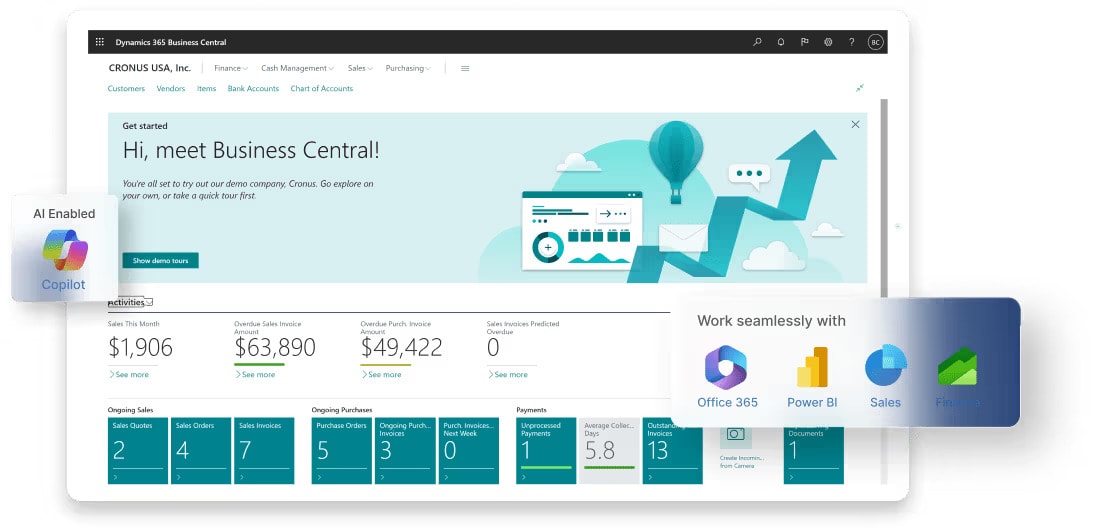
Microsoft Dynamics 365 Business Central is one of the most widely adopted ERP solutions for small and medium-sized manufacturing businesses looking for a flexible, scalable, and cloud-based platform.
Business Central for manufacturing connects production, inventory, purchasing, sales, warehouse operations, and finance into one unified system.
Key manufacturing capabilities include:
- Production orders
- Bill of Materials (BOM)
- Material Requirements Planning (MRP)
- Capacity planning
- Inventory management
- Warehouse management
- Demand forecasting
- Cost calculation
- Financial reporting
With integration across the Microsoft ecosystem, manufacturers can connect Business Central with tools such as Microsoft 365, Power BI, and Microsoft Copilot to improve productivity and decision-making.
For UK manufacturers, Dynamics 365 Business Central provides the flexibility needed by growing businesses while delivering enterprise-level capabilities without unnecessary complexity.
Compare the Top-rated ERP Systems for Your Business
2. Odoo ERP

Odoo is an open-source ERP solution that is flexible enough to be customised for any business, irrespective of its uniqueness. If you are a coder or have solution development skills, this ERP solution works best for you, as you can modify its functions and tools.
The Odoo Manufacturing module supports:
- Manufacturing orders
- Bills of Materials
- Work centres
- Maintenance management
- Inventory operations
- Quality control
For businesses, Odoo can streamline the different manufacturing processes that include raw material management, tracking resources, building production schedules, tracking the production cycle, and maintaining product quality.
See Also - Business Central vs Odoo: Which ERP Fits Your Business Best?
3. Acumatica ERP
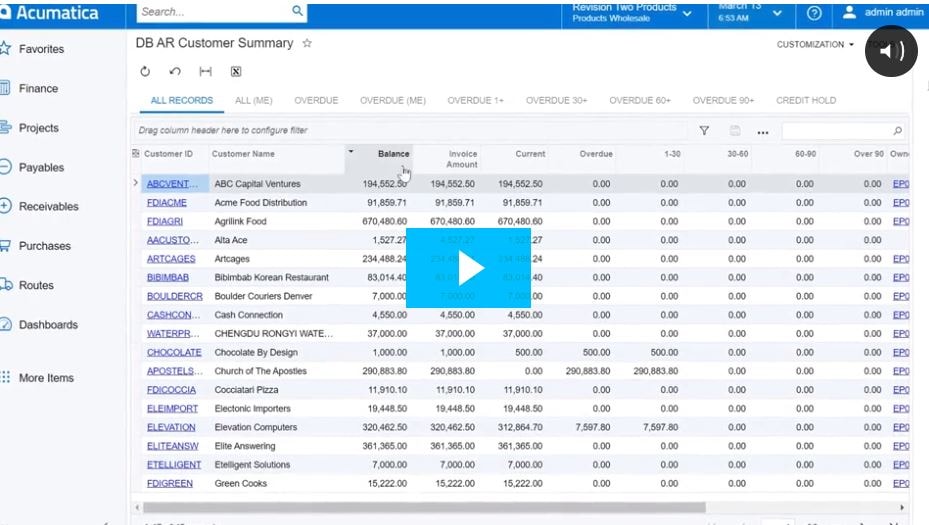
A cloud-based SaaS ERP solution that can manage, control, and streamline the business operations of a manufacturing business. With cloud and on-premises deployment options, businesses can implement this solution based on their core requirements.
It comes with various features that include production management, material billing, product planning, requirement planning, production scheduling, profit estimation, data collection, and offering real-time insights.
See Also - Business Central ERP Vs Acumatica ERP
4. Oracle Netsuite ERP
Oracle Netsuite ERP understands the core functioning of manufacturing businesses and aids them in dealing with complex processes. It empowers businesses to automate the manual time-consuming processes to promote productivity with limited manpower. If you are implementing this solution on cloud servers, you can avail yourself of unified data centres along with real-time data insights.
Oracle ERP offers various features to the business that include data automation, minimising the time taken in data processing, monitoring the cost of each product, calculating margins, tracking profits, lowering the technical support cost, and much more.
See Also - Dynamics 365 vs. NetSuite: Which One Delivers More for Mid-Market Businesses?
5. SAP Business One
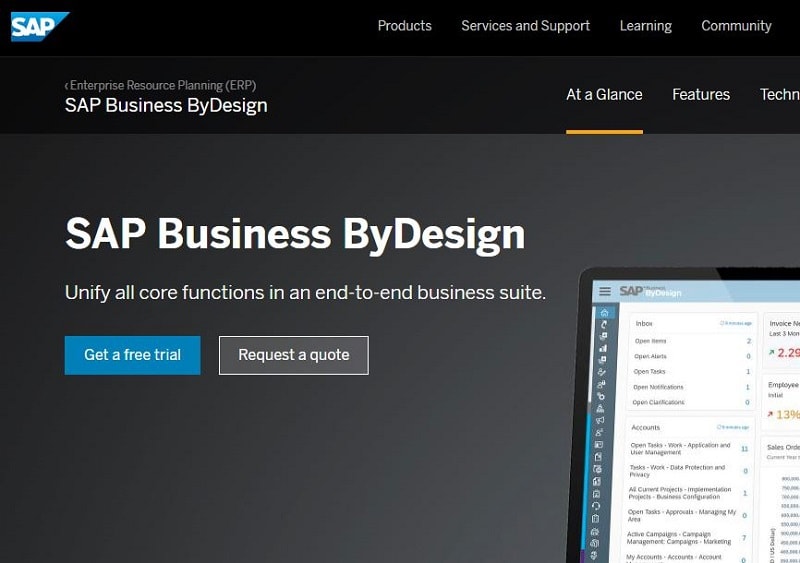
SAP Business One is an affordable ERP solution specifically built for small and medium businesses. For manufacturing businesses, it is flexible, cost-effective, and robust when it comes to controlling business operations. It offers key business insights to users and helps them make data-driven decisions to maximise profitability.
SAP Business One provides manufacturing features including:
- Production planning
- Inventory control
- Resource management
- Purchasing
- Financial management
- Reporting
SAP Business One Manufacturing ERP offers various features and functionalities that include centralising the data, tracking raw materials, checking the status of planned production, giving a holistic approach to the entire business, and reporting as well as business intelligence capabilities.
See Also - Dynamics 365 vs SAP: Which ERP Fits Your Business?
See Also - 15 Best ERP Systems for Small Businesses
6. Epicor Kinetic ERP

Epicor ERP, also known as Epicor Kinetic, is a manufacturing ERP solution that connects and streamlines different departments of a business. It follows simple procedures to deal with different business operations, resulting in enhanced ROI and maximised efficiency. Also, Epicor ERP offers a competitive edge in dealing with specific production processes by leveraging BI (business intelligence) and ML (machine learning).
It offers numerous features to manufacturing businesses, like comprehensive management of business processes, following government compliance, accepting integrations, enhanced data security, and project management.
7. IFS ERP Solution
IFS is especially built for manufacturing businesses by considering the actual complexities of the production industry. With discrete manufacturing capabilities, IFS ERP empowers businesses to track the product, starting from purchase to qualifying the quality parameters of the product. Also, it offers end-to-end support to manufacturers to build a successful product lifecycle.
Not only in the manufacturing industry, but it can also be implemented in automotive, high-tech manufacturing, and life sciences organisations.
See Also - IFS ERP vs Dynamics 365 Business Central
8. SYSPRO
SYSPRO is a smart manufacturing ERP solution that leverages the power of the latest technologies, like IoT, to enhance overall profitability while optimising resources. It comes with a broad list of tools that enable you to manage, track, and control business results. The best part about this ERP solution is that you can access it using any device and whenever you need.
It offers numerous features to the manufacturing business that include a centralised collaboration system, data analysis functionality, a 360-degree view of business operations, tracking projects, measuring efficiency, and streamlining data management.
9. QAD Systems
QAD is a cloud-based ERP system that is basically built to cater to a few departments that include food and beverages, automotive, industrial manufacturing, and more. Capable of processing global tax compliance to match global product or service demand. It is flexible, affordable, and accepts multiple currencies to process global business operations.
Being a flexible ERP solution, it offers numerous features that include low-code application building, embedded analytics, data reporting, working on any device (web or mobile), easy customization, meeting specific business requirements, and availability of support.
10. Infor CloudSuite

credit by infor.com
Infor CloudSuite Industrial is a complete ERP solution capable of managing complex manufacturing businesses. With built-in functionalities to offer full transparency across all business operations, it is also capable of managing manpower and capturing data from machines using IoT. It even constantly supplies you with real-time data about the tools, processes, and team collaboration to help you get complete visibility into the business.
It offers different features to manufacturing businesses, like built-in CRM functionality, a customer service dashboard, built-in HR functionality, payroll management, the availability of third-party integration, an expense management module, vendor performance tracking, and much more.
11. Absolute ERP
Absolute ERP is a proper cloud-based ERP solution for manufacturing that not only serves manufacturing businesses but also caters its services to the service and trading industries. Built for small and large organisations, it streamlines the different manufacturing processes with a unified database. One of the essential features of this ERP solution is finding weak business operations and working on them until they start performing well.
Absolute ERP offers various features that include managing complex processes, boosting results, managing different work floors, streamlining customer management, supply chain management, promoting collaboration, and accelerating business efficiency.
12. ORION ERP
ORION is a modular ERP solution that offers management of financial as well as manufacturing business processes. Equipped with BI, it comes with a unified database to let users access the data from anywhere, whenever needed. It also comes with automation that helps the users automate recurring or manual processes, resulting in maximised output.
ORION manufacturing ERP offers various features, like a sturdy supply chain, smooth inventory management, cost-effectiveness for small businesses, tracking budgets, cash management, material management, and production cycle management.
13. PLEX ERP
PLEX Manufacturing ERP streamlines business processes and manages the entire business, from the plant floor to automating recurring operations. Embedded with AI, IoT, and BI technologies, PLEX accelerates collaboration between machines and people. Plex pricing is based on a subscription model that eliminates the financial burden of a perpetual licence.
It comes with various features that include finance management, financial reporting, asset tracking, cash flow management, managing quality processes, building standardised parameters, tracking entire sales data, and forecasting product demands.
Common Manufacturing Challenges ERP Solves
Poor Inventory Visibility
Manufacturers frequently struggle with excess inventory, stock shortages, or inaccurate inventory records.
A manufacturing ERP provides real-time inventory visibility across warehouses, production facilities, and purchasing teams, helping businesses maintain optimal stock levels while reducing carrying costs.
Inefficient Production Planning
Production schedules often change because of material shortages, machine downtime, or unexpected customer demand.
ERP systems support:
- Production Scheduling
- Capacity Planning
- Work Centre Management
- Material Availability
- Resource Allocation
This enables manufacturers to optimise production while minimising delays.
Manual Data Entry
Many manufacturers still transfer data manually between accounting software, spreadsheets, purchasing systems, and production records.
ERP automates these workflows, reducing duplication, improving accuracy, and allowing employees to focus on higher-value activities.
Supply Chain Disruptions
Manufacturers depend on suppliers delivering raw materials on time.
ERP software helps purchasing teams monitor supplier performance, manage procurement, forecast material requirements, and reduce production delays caused by supply shortages.
Limited Business Visibility
Decision-makers often struggle because information is scattered across different systems.
Manufacturing ERP provides real-time dashboards covering:
- Inventory
- Production
- Financial Performance
- Sales
- Purchasing
- Profitability
- Machine Performance
- Operational KPIs
This enables faster and more informed decision-making.
Key Features Every Manufacturing ERP Should Include
Not every ERP system is designed specifically for manufacturers.
Before investing, ensure the solution offers the capabilities needed to support modern manufacturing operations.
Material Requirements Planning (MRP)
MRP automatically calculates the raw materials required for production based on demand forecasts, inventory levels, and production schedules.
This reduces shortages while preventing excess stock.
Bill of Materials (BOM)
BOM management defines every component required to manufacture a finished product.
Manufacturers can manage multiple BOM versions while maintaining product consistency.
Production Scheduling
Production scheduling helps manufacturers allocate labour, machinery, and materials efficiently.
Modern ERP systems dynamically adjust schedules whenever demand changes.
Inventory Management
Real-time inventory management allows manufacturers to monitor stock movements across warehouses, production facilities, and suppliers.
Key capabilities include:
- Barcode Scanning
- Batch Tracking
- Lot Tracking
- Serial Number Tracking
- Warehouse Transfers
- Cycle Counting
Shop Floor Control
Shop floor management provides complete visibility into manufacturing operations by tracking:
- Production Orders
- Machine Status
- Work Centres
- Labour
- Production Progress
This helps improve productivity while reducing downtime.
Quality Management
Manufacturing ERP helps businesses maintain consistent product quality by supporting:
- Quality Inspections
- Non-Conformance Tracking
- Product Traceability
- Compliance Reporting
- Corrective Actions
Supply Chain Management
Integrated procurement and supplier management improve purchasing decisions while strengthening supplier relationships.
Manufacturers can automate purchase orders, monitor supplier performance, and reduce procurement costs.
Business Intelligence
Modern ERP solutions include interactive dashboards that transform operational data into actionable insights.
Executives can analyse:
- Production Costs
- Inventory Turnover
- Gross Margin
- Machine Utilisation
- Sales Performance
- Forecast Accuracy
without relying on multiple reporting tools.
Artificial Intelligence & Automation
The latest manufacturing ERP systems increasingly include AI capabilities that help organisations:
- Predict demand
- Detect inventory shortages
- Recommend purchasing decisions
- Automate repetitive workflows
- Improve production planning
- Generate business insights using natural language
AI is becoming a major differentiator for manufacturers looking to improve efficiency while reducing operational costs.
How to Choose the Right ERP Solution for Manufacturing
Selecting the right ERP software isn't simply about choosing the biggest vendor. The best solution is the one that aligns with your manufacturing processes, growth plans, and operational requirements.
Before making a decision, evaluate the following factors:
Industry Fit
Choose an ERP designed to support your manufacturing model, whether it's discrete manufacturing, process manufacturing, engineer-to-order, make-to-order, make-to-stock, or mixed-mode production.
Scalability
Your ERP should grow alongside your business, supporting additional users, warehouses, production sites, and international operations without requiring a complete replacement.
Cloud vs On-Premises
Cloud ERP offers automatic updates, lower infrastructure costs, remote accessibility, and faster deployment. However, some manufacturers may still prefer on-premises deployments due to industry-specific security or compliance requirements.
Integration Capabilities
Your ERP should integrate seamlessly with CRM systems, eCommerce platforms, payroll software, warehouse management systems, CAD applications, Power BI, Microsoft 365, and other business tools to create a connected digital ecosystem.
Total Cost of Ownership
Look beyond the initial licence fee. Consider implementation, customisation, user training, ongoing support, future upgrades, and maintenance costs to understand the full investment.
Vendor Expertise
Finally, evaluate the implementation partner as carefully as the software itself. An experienced Microsoft partner with manufacturing expertise can significantly reduce implementation risks and help tailor the solution to your operational needs.
Why Microsoft Dynamics 365 Business Central is a Strong Choice for UK Manufacturers
While several ERP platforms support manufacturing operations, Microsoft Dynamics 365 Business Central stands out as a strong option for UK manufacturers because it combines manufacturing functionality, financial management, scalability, and Microsoft ecosystem integration.
Business Central helps manufacturers manage their complete operational lifecycle, including:
- Planning production requirements
- Managing inventory levels
- Tracking manufacturing costs
- Controlling purchasing processes
- Improving warehouse operations
- Analysing business performance
One of the biggest advantages of Business Central is its ability to connect manufacturing operations with finance.
For example, production costs, inventory movements, and sales performance can be analysed together, helping business leaders understand profitability more accurately.
Manufacturing ERP Comparison Table
Choosing an ERP system isn't just about features—it's about selecting a solution that aligns with your manufacturing processes, business size, growth plans, and budget. The comparison below highlights the strengths of each ERP platform to help simplify your decision-making.
| ERP Solution | Best For | Deployment | Manufacturing Capabilities | AI & Automation | Suitable Business Size |
|---|---|---|---|---|---|
| Microsoft Dynamics 365 Business Central | SMEs & Growing Manufacturers | Cloud & On-Premises | ⭐⭐⭐⭐⭐ | ⭐⭐⭐⭐⭐ | Small to Mid-sized |
| SAP Business One | Growing Businesses | Cloud & On-Premises | ⭐⭐⭐⭐☆ | ⭐⭐⭐☆ | Small to Mid-sized |
| Oracle NetSuite | Global Manufacturers | Cloud | ⭐⭐⭐⭐⭐ | ⭐⭐⭐⭐☆ | Mid-sized to Enterprise |
| Epicor Kinetic | Complex Manufacturing | Cloud & On-Premises | ⭐⭐⭐⭐⭐ | ⭐⭐⭐⭐☆ | Mid-sized to Enterprise |
| IFS Cloud | Asset-Intensive Industries | Cloud | ⭐⭐⭐⭐⭐ | ⭐⭐⭐⭐☆ | Enterprise |
| Infor CloudSuite Industrial | Industrial Manufacturing | Cloud | ⭐⭐⭐⭐⭐ | ⭐⭐⭐⭐☆ | Mid-sized |
| Acumatica | Growing SMEs | Cloud | ⭐⭐⭐⭐☆ | ⭐⭐⭐☆ | Small to Mid-sized |
| Odoo ERP | Startups & Small Businesses | Cloud & On-Premises | ⭐⭐⭐☆ | ⭐⭐☆ | Small Businesses |
| SYSPRO | Manufacturing & Distribution | Cloud & On-Premises | ⭐⭐⭐⭐☆ | ⭐⭐⭐☆ | Mid-sized |
| QAD Adaptive ERP | Regulated Industries | Cloud | ⭐⭐⭐⭐☆ | ⭐⭐⭐⭐☆ | Enterprise |
| Plex ERP | Smart Manufacturing | Cloud | ⭐⭐⭐⭐☆ | ⭐⭐⭐⭐⭐ | Mid-sized |
| ORION ERP | SMEs | Cloud | ⭐⭐⭐☆ | ⭐⭐☆ | Small Businesses |
| Absolute ERP | Budget-Friendly Manufacturing | Cloud | ⭐⭐⭐☆ | ⭐⭐☆ | Small Businesses |
Why Choose Dynamics Square UK for Manufacturing ERP?
Selecting the right ERP software is only the first step. Successful implementation depends on understanding your manufacturing processes and configuring the solution to match your operational requirements.
At Dynamics Square UK, we help manufacturers modernise operations with Microsoft Dynamics 365 Business Central by providing:
- Manufacturing ERP Consulting
- Business Process Assessment
- ERP Implementation
- Cloud Migration
- System Integration
- Custom Development
- User Training
- Ongoing Support & Optimisation
Our Microsoft-certified consultants work closely with manufacturers across engineering, industrial equipment, food & beverage, wholesale distribution, and other sectors to deliver ERP solutions that improve efficiency, reduce operational costs, and support sustainable growth.
Whether you're replacing legacy software or implementing ERP for the first time, we will help you choose the right solution based on your business objectives—not just software features.
Some FAQs for Manufacturing ERP Software
1. What is ERP for manufacturing?
ERP for manufacturing is an integrated software system that helps manufacturers manage production, inventory, purchasing, finance, warehousing, quality control, and supply chain operations from a single platform. It provides real-time visibility into business processes, enabling better planning, improved efficiency, and informed decision-making.
2. What are the benefits of ERP software for manufacturing?
Manufacturing ERP software helps businesses improve production planning, optimise inventory levels, automate manual processes, reduce operational costs, strengthen supply chain management, enhance product quality, and gain real-time visibility into business performance.
3. Which ERP is best for manufacturing businesses?
The best ERP depends on your business size, production complexity, and growth plans. Microsoft Dynamics 365 Business Central is an excellent choice for small and mid-sized manufacturers, while larger enterprises may also evaluate solutions such as Oracle NetSuite, Epicor, SAP, IFS, or Infor CloudSuite.
4. What is the difference between ERP and MRP?
MRP (Material Requirements Planning) focuses primarily on production planning and inventory requirements. ERP is a broader business management platform that includes MRP while also managing finance, purchasing, warehousing, sales, customer service, reporting, and supply chain operations.
5. Can manufacturing ERP integrate with other business systems?
Yes. Modern ERP platforms integrate with CRM systems, Microsoft 365, Power BI, eCommerce platforms, warehouse management systems, payroll software, shipping solutions, and third-party applications to create a connected business environment.
6. How long does ERP implementation take?
Implementation timelines vary depending on business size, process complexity, customisation requirements, and data migration. Small and medium-sized manufacturing businesses typically complete implementation faster than large enterprise organisations with complex operational requirements.
7. Is cloud ERP better than on-premises ERP?
Cloud ERP offers automatic updates, remote accessibility, lower infrastructure costs, and greater scalability, making it the preferred choice for many manufacturers. However, some organisations may still choose on-premises ERP due to industry-specific compliance or operational requirements.
Final Thoughts
Manufacturing businesses today require far more than accounting software or standalone production systems. They need a connected platform that brings together production planning, inventory management, procurement, finance, warehousing, quality control, and analytics to improve operational efficiency and support long-term growth.
The right ERP for manufacturing helps manufacturers reduce manual processes, gain real-time visibility, optimise production schedules, improve inventory accuracy, and make faster, data-driven decisions.
While there are several capable manufacturing ERP solutions available, Microsoft Dynamics 365 Business Central stands out as one of the most flexible and scalable options for UK manufacturers. Its built-in manufacturing capabilities, seamless Microsoft ecosystem integration, AI-powered features, and cloud-first architecture make it an excellent choice for businesses looking to modernise operations without unnecessary complexity.
If you're evaluating ERP solutions for manufacturing or planning to replace a legacy system, the team at Dynamics Square UK can help. Our Microsoft-certified consultants will assess your manufacturing processes, recommend the right solution, and deliver a successful implementation tailored to your business goals.
Ready to transform your manufacturing operations?
Contact Dynamics Square UK today to schedule a free consultation and discover how Microsoft Dynamics 365 Business Central can help streamline production, improve efficiency, and accelerate business growth.
Related articles:
.png&w=3840&q=75&dpl=dpl_H4wgTJWgj2C5erZxqYLVJAXn9j5o)