
Microsoft Dynamics ERP
Agentic and AI-Powered ERP Solutions for Modern Enterprises
Microsoft Dynamics ERP is a collection of agentic and AI-powered, cloud-based ERP applications for managing finance, operations, supply chain, sales, projects, and people, all hosted on Microsoft’s secure cloud platform.
Get your hands on a suitable Microsoft ERP to make your operations seamless and business futureproof. Schedule a free call today to get clarity on:
- Which ERP fits your size
- How AI fits into finance, supply chain, and operations
- Implementation process, cost, and long-term scalability
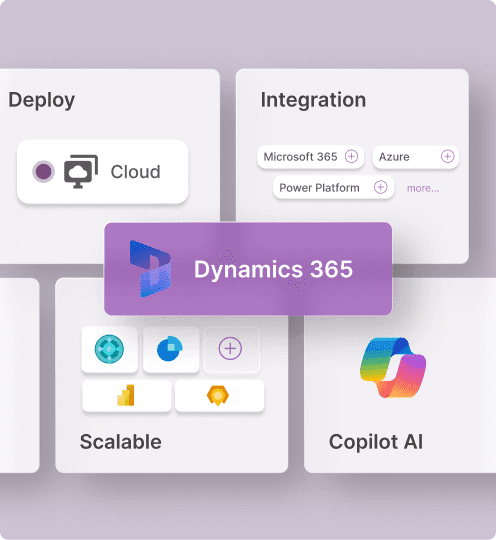
Microsoft ERP comprises agentic ERP Solutions which are a part of the bigger Dynamics 365 suite. These AI-powered ERPs serve as unified platforms which integrate financial oversight, operational governance, supply chain intelligence, project financials, human resources, and retail functionalities within an interconnected ecosystem.
Key aspects of Microsoft Dynamics ERP software:
Microsoft is transforming ERPs into something more than just automation. With AI agents integrated throughout finance and operations, the system goes beyond merely recording transactions, it detects anomalies, forecasts outcomes, suggests actions, and supports users in real time.
Agentic ERP Solutions represent the next phase of enterprise resource planning systems where software does not merely record transactions or automate workflows, but actively acts, reasons, and assists users using AI agents embedded across business processes.
Key aspects:
Microsoft is transforming ERPs into something more than just automation. With AI agents integrated throughout finance and operations, the system goes beyond merely recording transactions, it detects anomalies, forecasts outcomes, suggests actions, and supports users in real time.
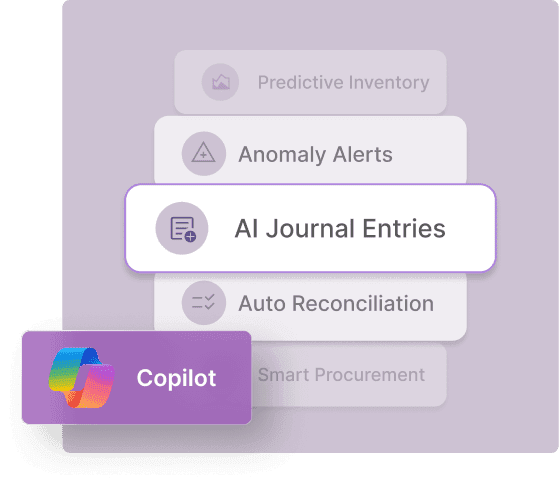
So, how do traditional ERPs differ from AI-powered ERP solutions?

A finance manager reviews month-end reports manually.

Inventory planners analyse stock levels periodically.

Procurement teams respond to shortages after alerts.

The AI agent flags unusual spending patterns before month-end.

It predicts potential stockouts based on demand signals.

It recommends purchase orders automatically.

It drafts journal entries for review.

It prepares cash flow forecasts without manual spreadsheet work.
Autonomy (Within Boundaries)
The system can initiate tasks such as generating recommendations, drafting communications, or preparing financial entries.
Contextual Awareness
It understands transactional patterns, historical data, and organisational structure.
Continuous Monitoring
Instead of static reporting cycles, it watches processes in real time.
Decision Support
It prioritises actions and presents structured recommendations.
Learning Capability
It improves accuracy based on historical corrections and outcomes.
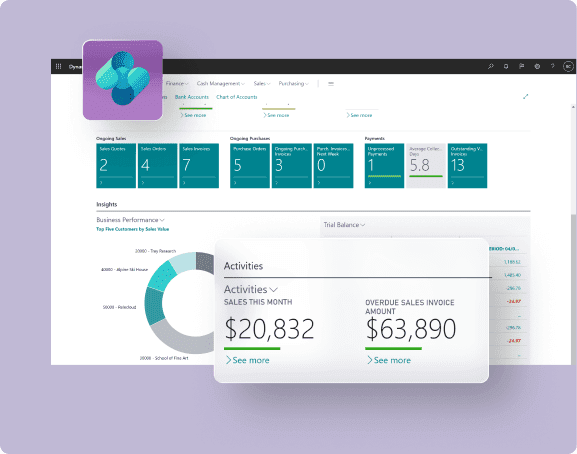
Dynamics 365 Business Central
Dynamics 365 Business Central is Microsoft’s all-in-one ERP designed for small and mid-sized businesses.
Key capabilities include:
- Financial management
- Sales and purchasing
- Inventory and warehouse management
- Project tracking
- Basic manufacturing
- Reporting and analytics
For organisations moving from legacy systems like Dynamics NAV, Sage, or entry-level accounting software, Business Central offers a natural progression into a modern Dynamics 365 ERP system.
Dynamics 365 Finance
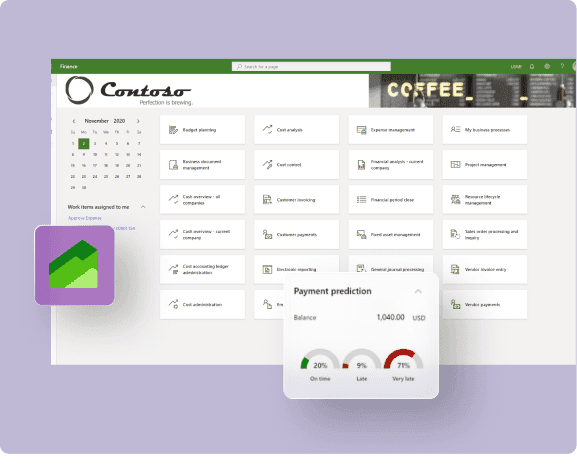
Dynamics 365 Finance is built for organisations that require advanced financial governance, multi-country compliance, and enterprise-level reporting.
Key capabilities include:
- Advanced general ledger
- Multi-currency, multi-entity consolidation
- Budget control and forecasting
- Regulatory compliance
- Embedded AI-driven financial insights
This Microsoft ERP solution supports CFOs and finance leaders seeking predictive visibility rather than retrospective reporting. If financial complexity is your core challenge, this is the backbone of your Microsoft Dynamics ERP Software architecture.
Dynamics 365 Supply Chain Management
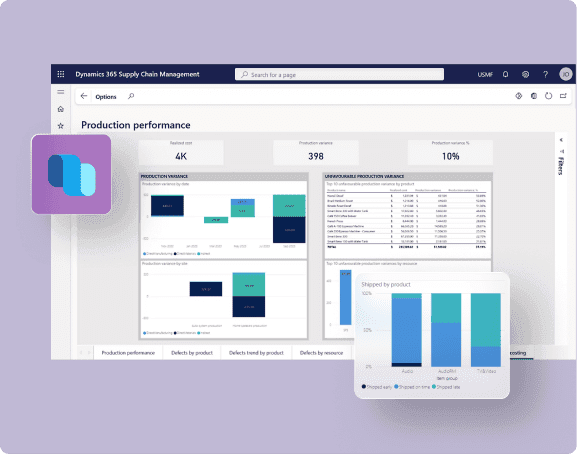
Dynamics 365 Supply Chain Management addresses operational efficiency across procurement, manufacturing, warehousing, and distribution.
Key capabilities include:
- Demand forecasting
- Production planning
- Inventory optimisation
- Asset management
- Warehouse automation
- Quality control
AI-powered forecasting improves stock positioning. Embedded analytics reduce disruptions. Real-time visibility enhances fulfilment reliability. For organisations with complex logistics, this transforms ERP from a static database into a decision-making engine.
Dynamics 365 Project Operations
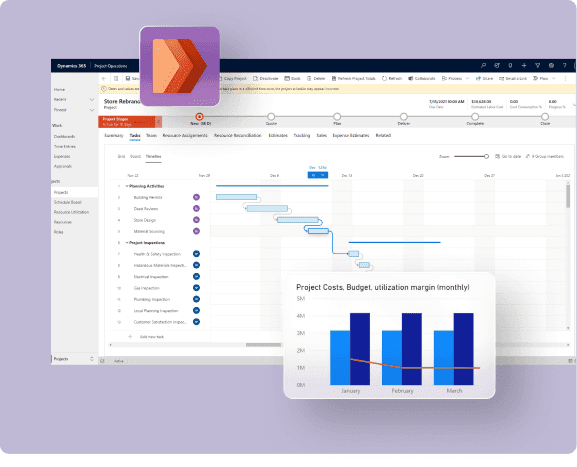
Dynamics 365 Project Operations is designed for project-centric businesses.
Key capabilities include:
- Project planning
- Resource scheduling
- Time and expense management
- Project accounting
- Revenue recognition
- Financial reporting
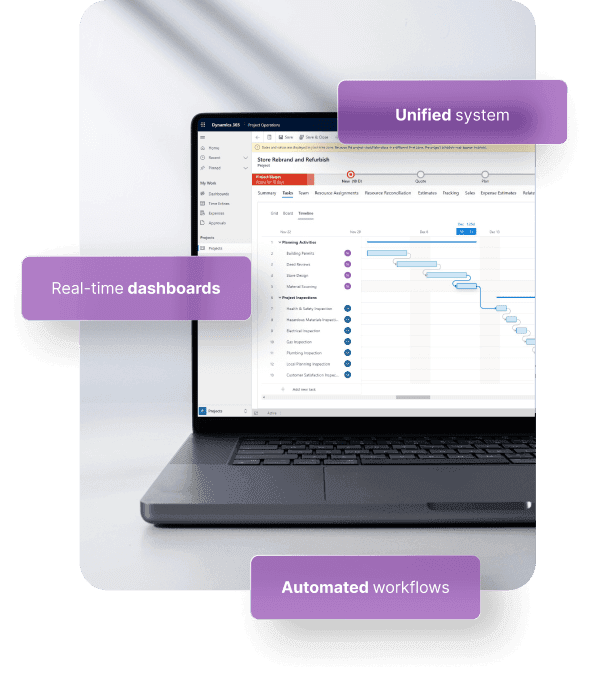
Professional services firms, consultancies, and engineering companies rely on Dynamics 365 Project Operations to ensure margin control and delivery predictability. This application bridges CRM and ERP, connecting sales pipelines directly with project financial execution.
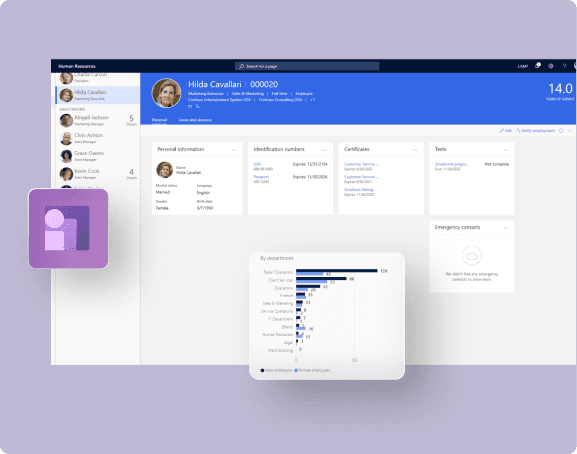
Dynamics 365 Human Resources
Dynamics 365 Human Resources supports workforce management, compliance, and employee engagement.
Key capabilities include:
- Leave and absence management
- Compensation planning
- Benefits administration
- Skills tracking
- Regulatory compliance
For organisations with complex workforce structures, HR integration into the broader Dynamics 365 ERP ecosystem ensures payroll, finance, and workforce data remain aligned.
Dynamics 365 Commerce
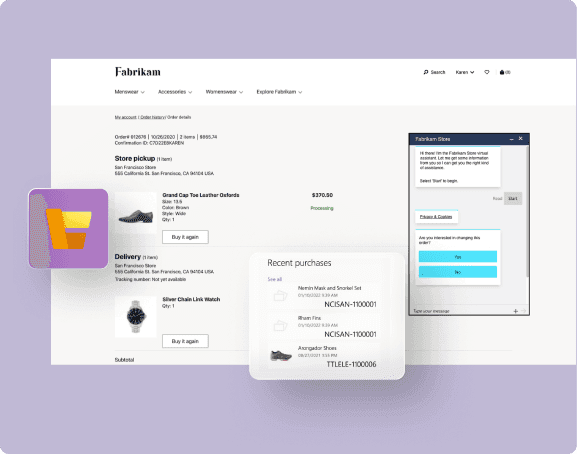
Dynamics 365 Commerce connects retail, e-commerce, and supply chain operations.
Key capabilities include:
- Unified point-of-sale
- E-commerce platform integration
- Real-time inventory visibility
- Customer insights
- Omnichannel retail management
Retailers and distributors use Commerce to eliminate data silos between physical stores, warehouses, and digital platforms.

These legacy systems are either approaching end-of-support milestones or lack modern AI, automation, and cloud capabilities. Migrating from legacy to Microsoft Dynamics 365 ERP is no longer optional for organisations seeking scalability, compliance, and innovation readiness.
Your ERP decision shapes your next decade of operations. Make it deliberate.

Will this scale over the next decade?

Does it reduce operational and compliance risk?

Is the total cost sustainable in long term?

Is the solution stable and future-ready?
And this is precisely where Microsoft Dynamics 365 ERPs stand apart. Let’s take a glance at the reasons why Microsoft Dynamics ERP ticks the maximum right boxes for companies:
Built to Scale Without Replacing the Platform
Many ERP systems become restrictive as organisations grow. That’s, however, not the case when you have a Dynamics 365 ERP. It is modular and expandable. You can begin with a focused deployment and scale into multi-entity, multi-country operations without changing systems. And that protects long-term investment.
Enterprise-Grade Security and Compliance
ERP systems hold your most sensitive financial and operational data. With Microsoft ERP solutions, security is foundational. It comes with Azure-backed cloud infrastructure, role-based access control, continuous security updates, and strong compliance alignment, that too out-of-the-box. For UK organisations navigating regulatory pressure, this reduces risk exposure.
Predictable Total Cost of Ownership
ERP cost is not just licence pricing. Infrastructure, upgrades, integration, and maintenance often drive long-term expense. As the Dynamics 365 ERP system is cloud-native, infrastructure overhead is reduced, Updates are continuous rather than disruptive, and AI enhancements roll out without major upgrades. Consequently, the financial model remains predictable.
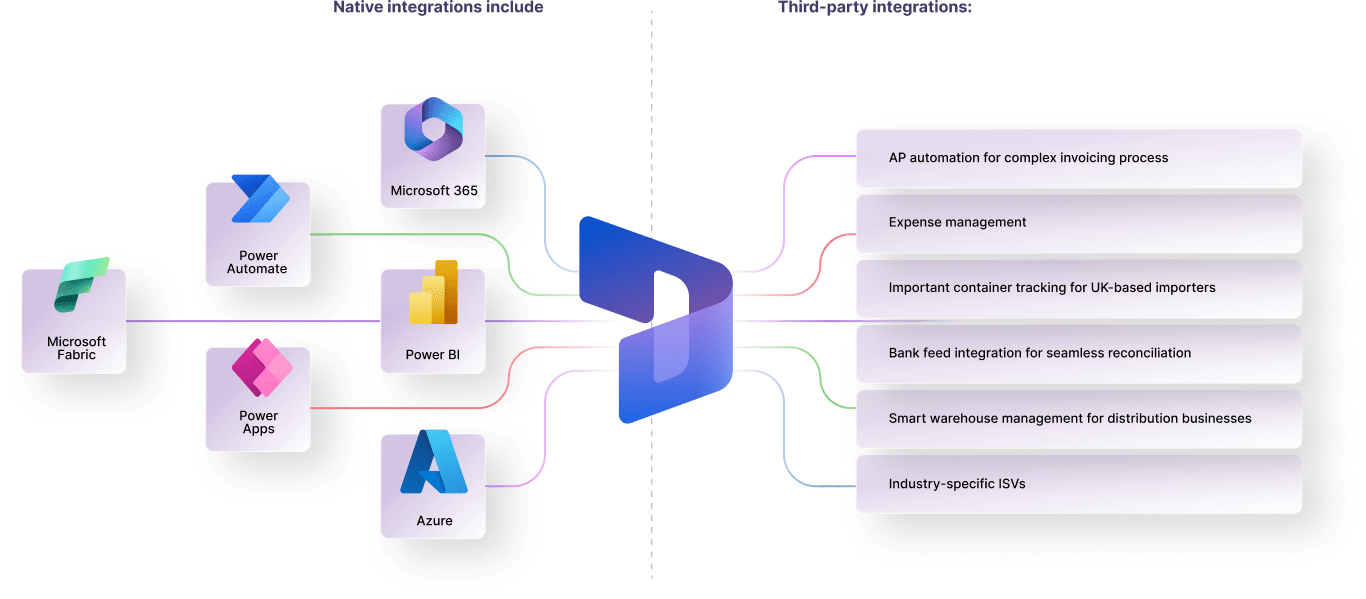
Native Microsoft Ecosystem Integration
Most organisations already use Microsoft 365, Teams, and Power BI. Microsoft Dynamics ERP software integrates natively across this ecosystem, reducing friction, improving adoption, and minimising custom integration layers. That translates to faster value realisation which brings the peace of mind and keep things running smoothly.
AI Embedded at the Core
With AI-Powered ERP Solutions in Dynamics 365, intelligence is built into workflows. Organisations gain predictive forecasting, automated anomaly detection, intelligent inventory optimisation, and Copilot-assisted financial processes. The ERP becomes an operational support system and not just a transactional database.
Long-Term Solution Stability
ERP is a decade-level decision. Choosing Microsoft ERP means aligning with a technology partner that continuously invests in cloud, AI, compliance, and global infrastructure. That reduces strategic uncertainty.
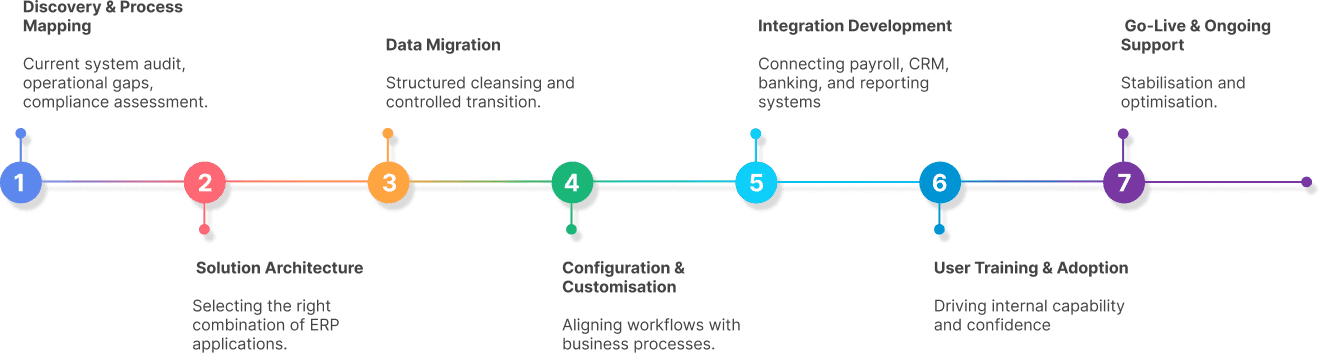
Selecting the right Microsoft Dynamics ERP partner determines implementation success more than the software itself.
Start Your ERP Implementation PlanIs Microsoft Dynamics ERP Right for You?
You should consider Microsoft Dynamics 365 ERP if:
- Your current system lacks scalability.
- Reporting requires excessive manual effort.
- Compliance requirements are increasing.
- You operate across multiple entities or regions.
- AI-driven forecasting would improve decision-making.
- You want a unified ecosystem across ERP, CRM, and analytics.
You may need a structured assessment if:
- You are unsure which ERP module fits your business model.
- You operate in a regulated UK industry.
- You are transitioning from NAV, GP, AX, or another legacy ERP.
- You require phased deployment across departments.

As a specialised and certified Microsoft Dynamics ERP partner, Dynamics Square focuses exclusively on Microsoft solutions.
We deliver:
Our approach is structured, transparent, and outcome driven. We prioritise operational clarity, risk mitigation, and measurable ROI. We do not believe in overselling functionality. We architect systems aligned with operational reality.
ERP is known as "Enterprise Resource Planning," which can manage and streamline business operations to boost efficiency and productivity in a business. CRM is known as Customer Relationship Management capable to streamline all customer interactions and provides a superior experience to all customers.
Microsoft Dynamics ERP is an enterprise resource management application capable of connecting almost all departments of a business and streamlining all operations for efficient business practices. It provides a centrally managed platform where all users of the organisation can interact, communicate, and share data in real-time without any restrictions. MS Dynamics ERP can successfully connect the supply chain, finance, operations, commerce, manufacturing, human resources, and reporting.
Microsoft possesses various ERP solutions built to deal with specific business operations. These solutions are given below:
- Microsoft Dynamics GP : Accounting software.
- Microsoft Dynamics NAV : An ERP solution for SMBs.
- Microsoft Dynamics SL : Business management solution.
- Microsoft Dynamics AX : For finance management
- Microsoft Dynamics 365 Finance : Microsoft Dynamics 365 Finance
- Microsoft Dynamics 365 Business Central : All-in-one business management
MS Dynamics ERP offers a number of benefits to businesses, helping them grow in terms of revenue and customers. It offers many benefits, including better insights, scalability, adaptability, seamless data reporting, improved efficiency, high revenue, and ease of customization as per changing business needs.
When it comes to features, Dynamics ERP has a number of advanced functions and capabilities to supercharge the growth with enhanced productivity and efficiency. Some of the features are: customisable dashboards, personalised reports, adaptable with add-ons, showing real-time analytics, and much more.