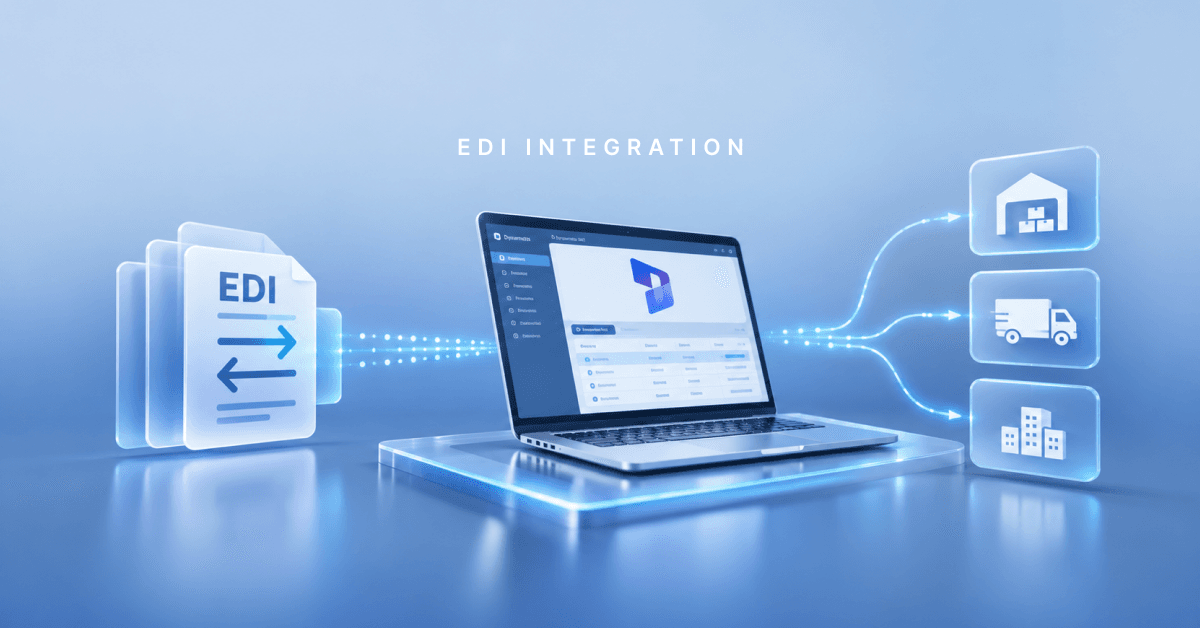
Managing orders across multiple sales channels can become complicated as a business grows. Orders may come from an e-commerce website, physical stores, marketplaces or business partners, while fulfilment may involve several warehouses and delivery providers. When these systems do not share information effectively, businesses can face stock discrepancies, delayed deliveries and limited visibility of order status.
Microsoft Dynamics 365 Intelligent Order Management (IOM) helps businesses coordinate orders from different channels and manage their journey through fulfilment. It connects order sources, inventory information and fulfilment partners through configurable workflows, giving teams a more consistent view of order progress.
Table of Contents
- What is Microsoft Dynamics 365 Intelligent Order Management?
- Key Features of Dynamics 365 Intelligent Order Management
- Benefits of Dynamics 365 Intelligent Order Management
- How Does Intelligent Order Management Work with Other Microsoft Tools?
- What's New in Dynamics 365 Intelligent Order Management in 2026?
- Who Should Use Dynamics 365 Intelligent Order Management?
- How Much Does Dynamics 365 Intelligent Order Management Cost in the UK?
- How Can Dynamics Square UK Help with Intelligent Order Management?
- Final Thoughts
- Frequently Asked Questions
For example, a retailer selling through its website and physical stores may need to fulfil orders from multiple warehouses. Intelligent Order Management can use inventory visibility and configured fulfilment strategies to help determine where orders should be fulfilled, based on factors such as stock availability, distance and business constraints.
In this guide, we explain what Microsoft Dynamics 365 Intelligent Order Management does, its main features, integrations, pricing and how UK businesses can use it to improve order orchestration.
What is Microsoft Dynamics 365 Intelligent Order Management?
Microsoft Dynamics 365 Intelligent Order Management is a cloud-based application that helps businesses orchestrate orders from order capture through to fulfilment. It brings together information from different order channels, business applications and fulfilment partners, helping organisations manage order processes through configurable workflows.
The application is built on Microsoft Dataverse and uses a provider framework to connect with Microsoft and third-party systems. It can work with applications such as Microsoft Power Platform, Dynamics 365 Supply Chain Management, Dynamics 365 Commerce and Dynamics 365 Finance. Third-party integrations depend on the available provider, connector or custom integration requirements.
Its core capabilities include order orchestration, inventory visibility, fulfilment optimisation and order-related insights. Businesses can configure workflows and business rules to manage how orders move between systems and fulfilment locations.
Key Features of Dynamics 365 Intelligent Order Management
1. Centralised Order Visibility
View orders from connected sales channels and business applications in one place. Teams can monitor order information and fulfilment status without relying on separate systems for every sales channel.
2. Real-Time Inventory Visibility
The integrated Inventory Visibility service provides a real-time view of inventory across the supply network. When connected systems share the required inventory information, businesses can use it to support order allocation and fulfilment decisions.
3. Intelligent Fulfilment Optimisation
The fulfilment optimisation service helps determine an appropriate source for an order. Businesses can configure strategies and constraints based on factors such as inventory availability, fulfilment distance, warehouse timings and partial fulfilment requirements.
4. Configurable Order Orchestration
Configure workflows to control how orders move through different processing stages. Business rules and orchestration flows can trigger actions when order events or fulfilment conditions occur.
5. Provider-Based Integrations
Use providers to connect Intelligent Order Management with supported e-commerce, marketplace, logistics, fulfilment and Microsoft business applications. Organisations can also extend the provider framework to connect systems that are not covered by an existing provider.
6. Order and Fulfilment Insights
Use the available Power BI dashboards to monitor order and fulfilment metrics. These insights help teams review order activity, identify operational issues and understand fulfilment performance.
7. Scalable Order Processing
Intelligent Order Management is designed to support different order volumes and complex supply chain environments. Its orchestration capabilities help businesses coordinate multiple order sources and fulfilment partners as their operations change.
8. Split Order Fulfilment
When a single warehouse cannot fulfil an entire order, configured fulfilment strategies can allocate different order lines to different sources. Businesses can also set constraints to control how many warehouses can fulfil an order.
9. Business Rules and Fulfilment Constraints
Set business constraints such as maximum fulfilment distance, warehouse cut-off times, safety stock levels and restrictions on partial fulfilment. These settings help align fulfilment decisions with operational requirements.
10. Low-Code Extensibility
Intelligent Order Management uses Microsoft Power Platform technologies, including Power Automate and Dataverse. Businesses and implementation partners can use these tools to customise workflows and build providers for additional integration requirements. The level of technical work depends on the complexity of the solution.
Benefits of Dynamics 365 Intelligent Order Management
Improved Order Visibility
Bring information from connected order channels into a central application. This helps teams understand order status and identify where further action may be required.
More Informed Fulfilment Decisions
Use inventory information, fulfilment strategies and business constraints to determine suitable fulfilment sources. This can help businesses manage orders across multiple warehouses and locations.
Reduced Manual Order Processing
Configured orchestration workflows can automate routine steps and actions between connected systems, reducing the need for employees to manage every order update manually.
Better Customer Order Management
More consistent order and fulfilment information helps customer service teams respond to order enquiries with greater visibility of the fulfilment process.
Support for Multiple Sales Channels
Coordinate orders from different connected channels through a common orchestration process. This is particularly useful for businesses operating across e-commerce, retail and B2B sales channels.
Flexible Integration
The provider framework allows businesses to connect Microsoft applications and supported third-party services. Additional providers can be developed where existing integration options do not meet specific requirements.
How Does Intelligent Order Management Work with Other Microsoft Tools?
Dynamics 365 Intelligent Order Management can work alongside other Microsoft applications to connect order processing with wider business operations. The integration requirements depend on the systems a business already uses and the processes it wants to automate.
Dynamics 365 Commerce – Connect retail and commerce operations with order orchestration processes.
Dynamics 365 Supply Chain Management – Connect supply chain and inventory processes with order fulfilment.
Dynamics 365 Finance – Connect relevant financial and order information with finance and operations processes.
Microsoft Power Platform – Use Power Automate and Dataverse capabilities to build and extend integration workflows.
Microsoft Dataverse – Provides the data platform used by Intelligent Order Management and supports connections with other business applications.
Intelligent Order Management also supports integration with non-Microsoft applications through its provider framework. The availability of a particular integration depends on the provider, connector, API and any additional configuration or development required.
What's New in Dynamics 365 Intelligent Order Management in 2026?
Microsoft's product updates during 2025 and 2026 have included improvements to order processing, orchestration reliability and error handling. These updates are particularly relevant for businesses managing high order volumes or complex integrations.
Improved order retry handling: Updates introduced smarter retry mechanisms to help recover from temporary failures during order synchronisation and processing.
Order queue visibility: New queue views and error-handling capabilities make it easier for teams to identify and investigate orders that encounter processing issues.
Order reprocessing: Failed inbound orders can be reprocessed through the available error-handling capabilities, helping teams recover from certain processing failures.
Improved order splitting: Updates help handle incomplete or interrupted order-splitting operations more reliably and reduce the risk of duplicate order records.
Processing and performance improvements: Configurable batch sizes and other technical improvements help address processing requirements in higher-volume environments.
These updates focus mainly on platform reliability and operational handling rather than introducing a completely new order management process. Businesses should review Microsoft's current release notes before planning an upgrade or implementation.
Who Should Use Dynamics 365 Intelligent Order Management?
Dynamics 365 Intelligent Order Management can be suitable for businesses that manage orders across multiple channels, systems and fulfilment locations. It is particularly relevant for organisations that:
Sell through multiple channels, including websites, stores and B2B platforms.
Manage inventory across multiple warehouses or fulfilment locations.
Work with different logistics and fulfilment partners.
Need better visibility of order status across connected systems.
Want to automate order processing and fulfilment workflows.
Need configurable fulfilment strategies to manage stock availability and delivery constraints.
Are expanding their e-commerce or omnichannel operations.
It can be relevant to retail, e-commerce, wholesale, food and manufacturing businesses, depending on their order volumes, integration requirements and fulfilment processes.
How Much Does Dynamics 365 Intelligent Order Management Cost in the UK?
Microsoft's UK pricing page currently lists Dynamics 365 Intelligent Order Management at £242.24 per month, excluding VAT. The listed plan includes capacity for 1,000 order lines per tenant per month.
Additional capacity may be required depending on your monthly order-line volume. Licensing requirements should be reviewed against your expected usage and integration needs before purchasing.
For current licensing information and an assessment of your requirements, speak to Dynamics Square UK.
How Can Dynamics Square UK Help with Intelligent Order Management?
Implementing Dynamics 365 Intelligent Order Management involves more than configuring the application. Businesses need to assess their existing order channels, inventory systems, fulfilment partners and integration requirements before designing the solution.
Dynamics Square UK helps businesses plan and implement Microsoft Dynamics 365 solutions around their operational requirements. Our team can support you with:
Assessing your existing order management and fulfilment processes.
Planning the Intelligent Order Management implementation.
Configuring order orchestration workflows and business rules.
Connecting relevant Microsoft and third-party applications.
Configuring inventory visibility and fulfilment optimisation requirements.
Providing user training and ongoing support.
Whether you are connecting multiple sales channels or improving fulfilment across different locations, Dynamics Square UK can help you assess how Intelligent Order Management fits into your wider Dynamics 365 environment.
Contact Dynamics Square UK to discuss your Intelligent Order Management requirements.
Final Thoughts
Managing orders across multiple sales channels and fulfilment locations requires reliable coordination between business applications, inventory systems and fulfilment partners. Microsoft Dynamics 365 Intelligent Order Management helps businesses manage these processes through centralised order visibility, configurable orchestration workflows and fulfilment optimisation.
For organisations looking to improve their order management processes, the right implementation starts with understanding existing systems, integration requirements and fulfilment strategies.
Contact Dynamics Square UK to discuss how Microsoft Dynamics 365 Intelligent Order Management could support your business.
Frequently Asked Questions
It helps businesses orchestrate orders from different sales channels and connected systems through to fulfilment. Its capabilities include order visibility, inventory visibility, configurable workflows and fulfilment optimisation.
Intelligent Order Management uses a provider framework and Power Platform connectors to integrate with external applications. The availability of a Shopify or Salesforce integration depends on the provider or connector available for the required scenario, or whether a custom integration is needed.
Intelligent Order Management focuses on coordinating orders across channels, systems and fulfilment partners. Dynamics 365 Supply Chain Management covers broader supply chain operations, including planning, procurement, manufacturing, inventory and warehouse management. The applications can work together as part of a wider solution.
It can support different business sizes, but suitability depends on order volumes, channel complexity, integration requirements and implementation costs. Businesses should assess whether its orchestration capabilities match their operational needs.
Many workflows and integrations can be configured using low-code Microsoft Power Platform tools. However, more complex requirements, unsupported integrations and custom provider development may require technical expertise.
Microsoft's UK pricing page lists the application at £242.24 per month, excluding VAT, with 1,000 order lines per tenant per month. Check Microsoft's pricing and licensing guidance for current terms and additional capacity requirements.