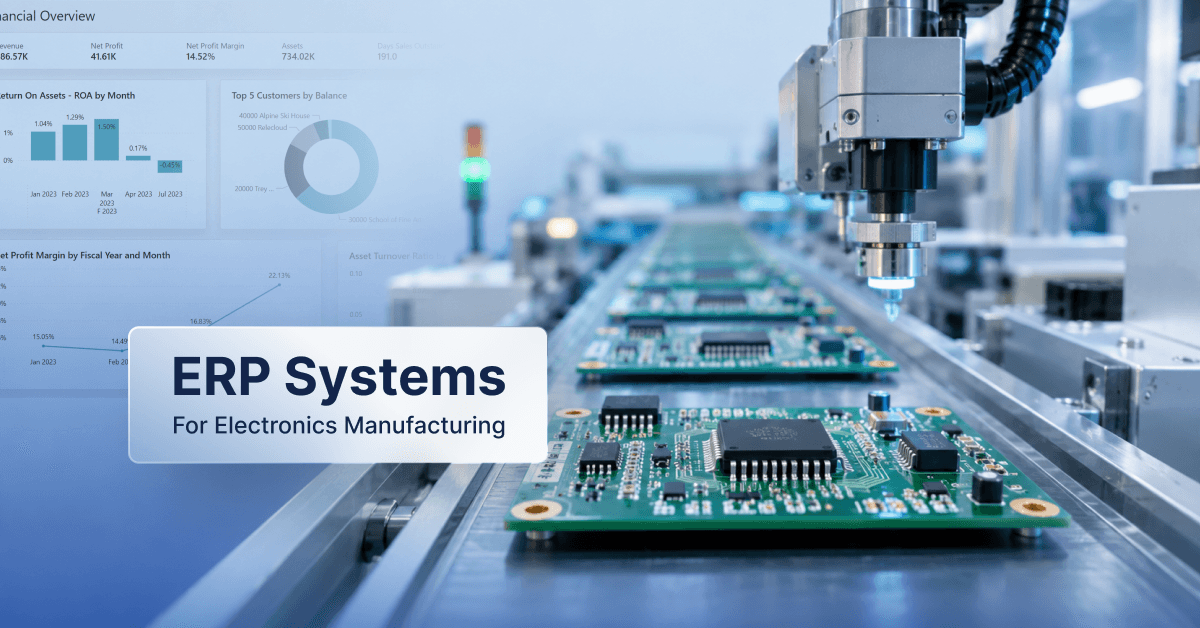
Electronics manufacturers in the UK operate in a competitive environment where production accuracy, component availability, product quality and supply chain visibility directly affect business performance. Whether a company manufactures printed circuit boards (PCBs), electronic components, electrical equipment or complex electronic assemblies, managing these operations efficiently requires the right technology.
Traditional accounting software and disconnected production tools often struggle to support the demands of modern electronics manufacturing. Businesses need better control over bills of materials (BOMs), component inventory, production schedules, supplier relationships, purchasing, quality checks and financial reporting.
Table of Contents
- What Is ERP for Electronics Manufacturing?
- 9 ERP Systems for Electronics Manufacturing in the UK
- 1. Dynamics 365 Business Central
- 2. Epicor Kinetic
- 3. Infor CloudSuite Industrial
- 4. SAP Business One
- 5. Sage X3
- 6. Oracle NetSuite ERP
- 7. IFS Cloud
- 8. SYSPRO ERP
- 9. Cetec ERP
- Why Do Electronics Manufacturers Need a Cloud ERP System?
- How to Choose the Right ERP for Electrical and Electronics Manufacturing
- Why Consider Dynamics 365 Business Central for Electronics Manufacturing?
- How Dynamics Square UK Helps Electronics Manufacturers
- Final Thoughts
- Frequently Asked Questions
This is where ERP for electronics manufacturing becomes important. An integrated Enterprise Resource Planning (ERP) system connects manufacturing, inventory, procurement, finance and supply chain operations through a centralised business platform.
However, not every ERP solution offers the same manufacturing capabilities. Some systems are designed for growing manufacturers, while others support complex production environments, multi-site operations and enterprise-level supply chains.
In this guide, we explore 9 ERP systems for electronics manufacturing in the UK, their key capabilities, business suitability and the factors manufacturers should consider before selecting a solution.
What Is ERP for Electronics Manufacturing?
ERP for electronics manufacturing is business management software that connects production planning, component procurement, inventory management, quality control, supply chain operations and financial processes within one integrated system.
Unlike general business management software, manufacturing ERP must support the operational requirements of electronics businesses, including multi-level BOMs, component tracking, engineering changes, production scheduling and material requirements planning (MRP).
For example, when an electronics manufacturer receives a new customer order, its ERP system can help determine the required components, check available inventory, identify purchasing requirements and plan production activities.
A well-configured ERP system can help manufacturers:
Manage multi-level bills of materials and component requirements.
Monitor electronic components across inventory locations.
Plan and schedule production more effectively.
Track serial numbers, batches and component movements.
Manage supplier purchasing and procurement.
Monitor production costs and material consumption.
Improve quality management and product traceability.
Connect financial reporting with manufacturing operations.
For UK manufacturers dealing with changing component prices, supplier delays and shorter product lifecycles, these capabilities can support better operational decisions.
9 ERP Systems for Electronics Manufacturing in the UK
Choosing an ERP platform depends on manufacturing complexity, company size, production requirements, budget and integration needs.
Below are nine ERP solutions worth evaluating for electronics and electrical manufacturing businesses operating in the UK.
1. Dynamics 365 Business Central
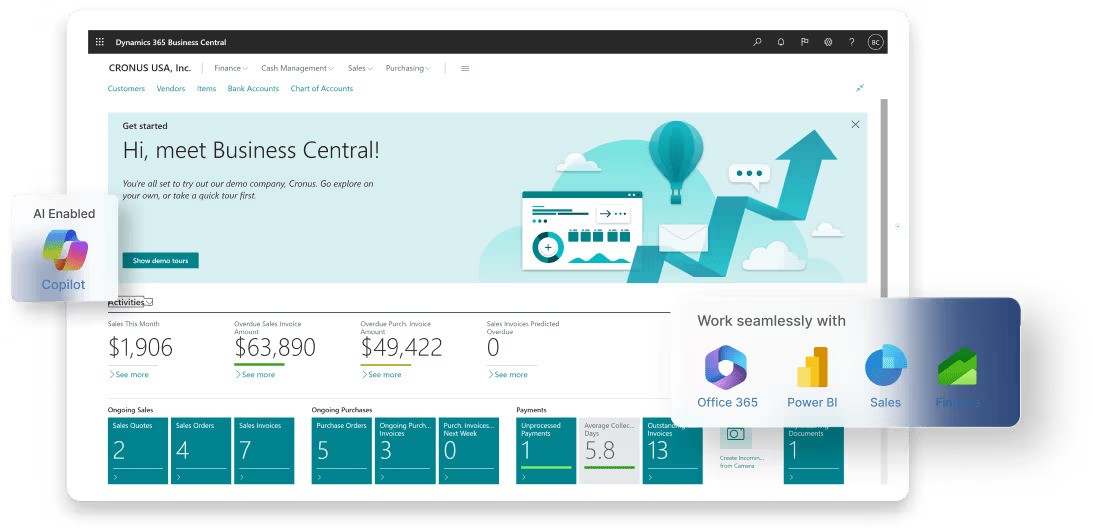
Microsoft Dynamics 365 Business Central is a cloud-based ERP solution designed for small and medium-sized businesses looking to connect finance, inventory, purchasing, sales and manufacturing operations.
It is a practical option for growing electronics manufacturers that want to replace disconnected business applications and spreadsheets with an integrated ERP platform.
Business Central provides manufacturing functionality through its Premium licence, including production BOMs, routings, production orders, work centres and machine centres.
Key features:
Production BOM and multi-level component management.
Production order management.
Material requirements planning (MRP).
Inventory and warehouse management.
Purchasing and supplier management.
Production costing and financial reporting.
Sales order and demand management.
Microsoft Power BI integration.
Integration with Microsoft 365 and Power Platform.
How does it help electronics manufacturers?
Electronics manufacturers frequently manage multiple components, suppliers and production requirements. Business Central helps bring purchasing, inventory, manufacturing and finance together.
For example, a manufacturer producing electronic control panels can use production BOMs to define the components required for each product. Production orders help manage manufacturing activities, while inventory records provide visibility into available materials.
Businesses can also extend Business Central through Microsoft AppSource applications and integrations to address additional requirements, such as advanced manufacturing, shop-floor data collection, quality management and product lifecycle management.
Best suited for: Growing UK electronics manufacturers, electrical equipment producers and SMEs that need integrated ERP functionality without immediately moving to a large enterprise platform. You can read more about Dynamics 365 for Electronics Manufacturing guide.
Important consideration: Advanced electronics-specific requirements, such as detailed engineering change management, sophisticated component substitution and MES integration, may require additional applications or customisation.
2. Epicor Kinetic

Epicor Kinetic is a manufacturing-focused ERP platform designed for businesses with complex production and supply chain requirements.
It supports different manufacturing models, including make-to-order, engineer-to-order and discrete manufacturing. Its manufacturing capabilities make it worth evaluating for electronics and high-tech manufacturers.
Key features:
Production planning and scheduling.
BOM and routing management.
Inventory and material management.
Manufacturing execution capabilities.
Supply chain management.
Quality management.
Production costing.
Business intelligence and reporting.
How does it help electronics manufacturers?
Electronics manufacturers often deal with changing product specifications, component shortages and complex production schedules.
Epicor Kinetic helps manufacturers coordinate production, inventory and purchasing processes. Its manufacturing-focused capabilities can support businesses that need greater visibility into work orders, material requirements and production performance.
Best suited for: Mid-sized and larger electronics manufacturers, contract manufacturers and businesses with complex discrete manufacturing requirements.
Important consideration: Assess the implementation scope, licensing costs and integrations required for your specific production environment.
3. Infor CloudSuite Industrial
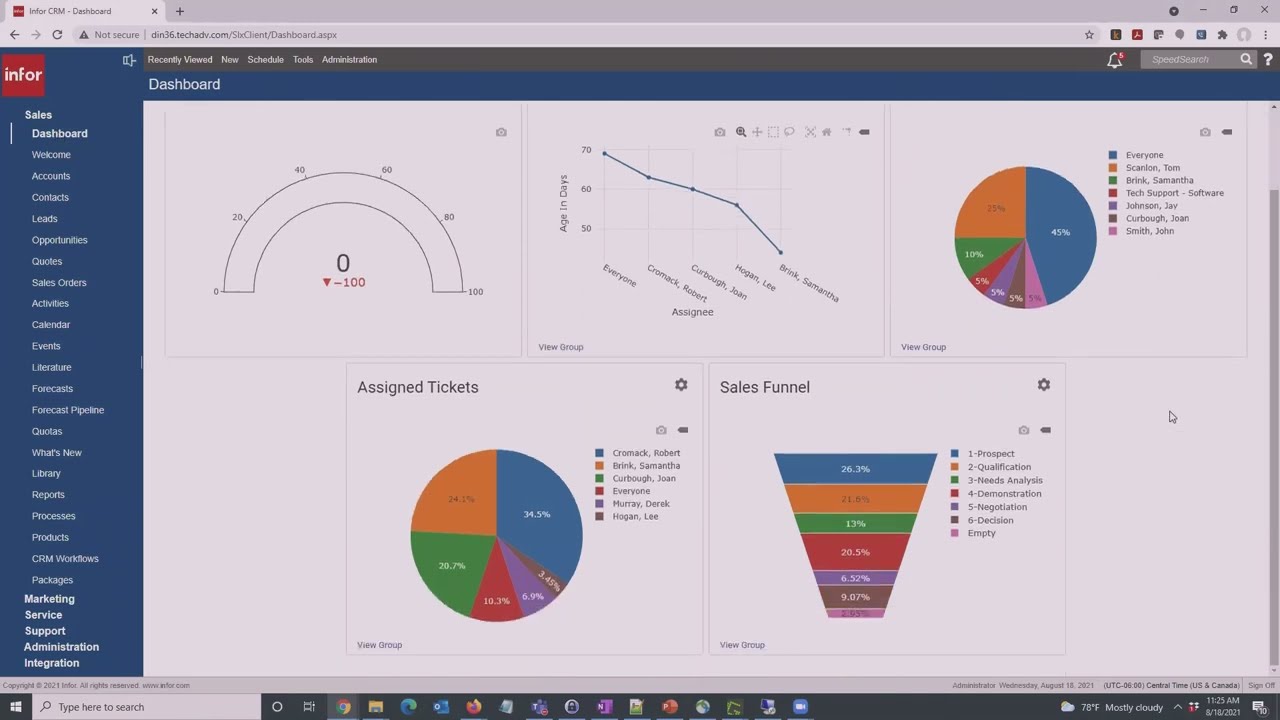
Infor CloudSuite Industrial, also known as SyteLine, is an ERP solution designed for industrial and manufacturing businesses.
Infor also offers industry-specific ERP capabilities for electrical and electronics manufacturers, making its portfolio relevant to companies with complex component-based production requirements.
Key features:
Production planning and scheduling.
BOM and routing management.
Inventory and procurement management.
Manufacturing cost management.
Quality and traceability.
Supply chain management.
Engineering change management.
Integration with manufacturing execution systems.
How does it help electronics manufacturers?
Electronics production involves frequent engineering changes, component substitutions and supply chain challenges.
Infor's electronics and industrial manufacturing solutions address requirements such as component traceability, material planning, engineering changes and production sequencing.
This can help manufacturers maintain better control over product revisions, component availability and manufacturing operations.
Best suited for: Electronics manufacturers with complex production processes, high-volume assembly operations and demanding supply chain requirements.
Important consideration: Evaluate the specific Infor product, deployment model and industry functionality being proposed. Infor's broader electronics portfolio includes capabilities beyond CloudSuite Industrial.
4. SAP Business One
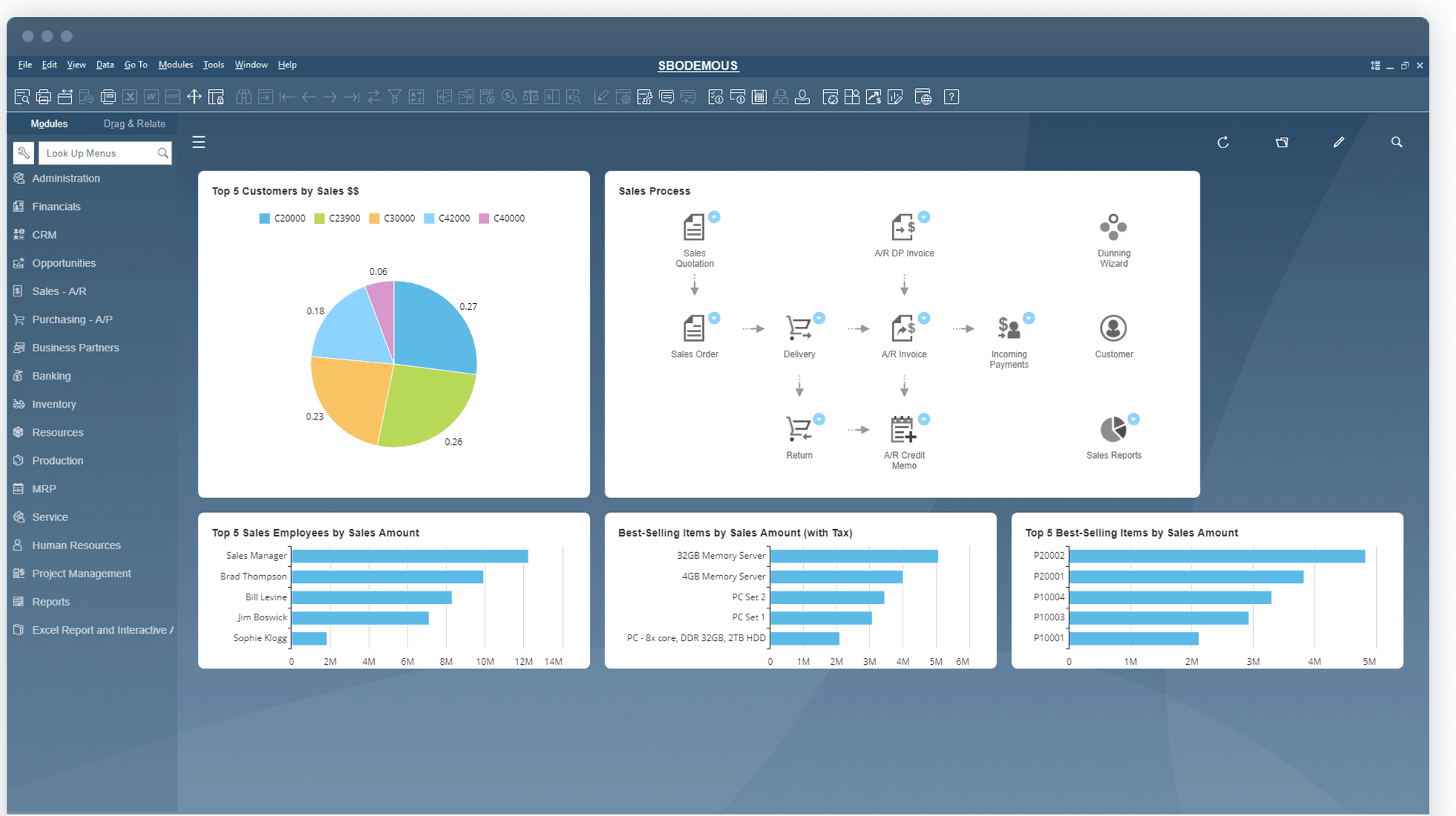
SAP Business One is an ERP solution designed primarily for small and medium-sized businesses.
It connects essential business functions, including finance, purchasing, sales, inventory and production management.
For electronics manufacturers looking to improve operational visibility, SAP Business One can provide a centralised business management platform.
Key features:
Production and BOM management.
Inventory and warehouse management.
Material requirements planning.
Purchasing and supplier management.
Financial management.
Sales and customer management.
Reporting and business intelligence.
Integration with third-party applications.
How does it help electronics manufacturers?
SAP Business One can help manufacturers manage component purchasing, production requirements and finished goods inventory.
For example, an electrical equipment manufacturer can use BOMs and production orders to organise the materials and processes required to manufacture different products.
Additional manufacturing functionality can be introduced through specialist add-ons, depending on business requirements.
Best suited for: Small and medium-sized electronics manufacturers looking for integrated finance, inventory and production management.
Important consideration: Businesses with advanced manufacturing requirements should assess the capabilities of the core platform and any additional manufacturing applications before implementation.
5. Sage X3
Sage X3 is an ERP platform designed for growing and mid-sized businesses with manufacturing, distribution and multi-site operational requirements.
It brings together financial management, procurement, inventory, production and supply chain processes.
Its production management functionality supports discrete and process manufacturing operations.
Key features:
Production planning and scheduling.
Multi-level BOM management.
Production work orders.
Inventory and warehouse management.
Quality management.
Batch and serial number tracking.
Procurement and supplier management.
Multi-site and multi-company management.
How does it help electronics manufacturers?
Sage X3 can help electronics manufacturers manage production requirements, material availability and product traceability.
Its BOM version management and production management functionality are particularly relevant to businesses that regularly update product specifications or manufacture multiple product variations.
Manufacturers can also monitor production activity and connect operational data with financial reporting.
Best suited for: Mid-sized electronics and electrical equipment manufacturers with multiple production locations or more complex supply chain requirements.
Important consideration: Assess how the platform will support electronics-specific engineering processes, component revisions and specialist manufacturing integrations.
6. Oracle NetSuite ERP
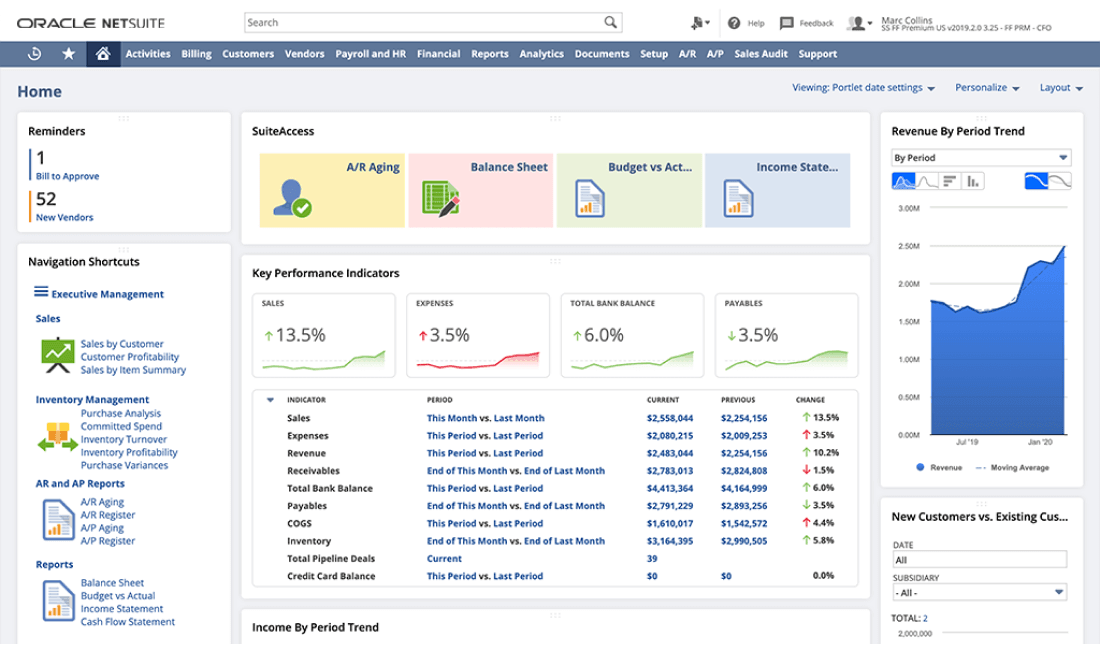
Oracle NetSuite ERP is a cloud-based business management platform that connects finance, inventory, procurement, order management and manufacturing processes.
It is particularly relevant to businesses looking for cloud-based ERP functionality across multiple locations and business entities.
Key features:
Cloud-based financial management.
Inventory and warehouse management.
Manufacturing and work order management.
BOM and assembly management.
Demand planning.
Procurement management.
Multi-location inventory visibility.
Business reporting and analytics.
How does it help electronics manufacturers?
NetSuite can help electronics businesses coordinate purchasing, inventory, production and financial processes through a centralised platform.
Its manufacturing capabilities can support businesses managing assembly operations, production orders and component inventory.
Cloud accessibility can also help organisations with multiple sites maintain visibility across their operations.
Best suited for: Growing electronics businesses, manufacturers with multiple entities and companies looking for integrated cloud ERP.
Important consideration: Businesses with complex electronics manufacturing requirements should validate the availability of advanced production planning, engineering change control and shop-floor integrations.
7. IFS Cloud
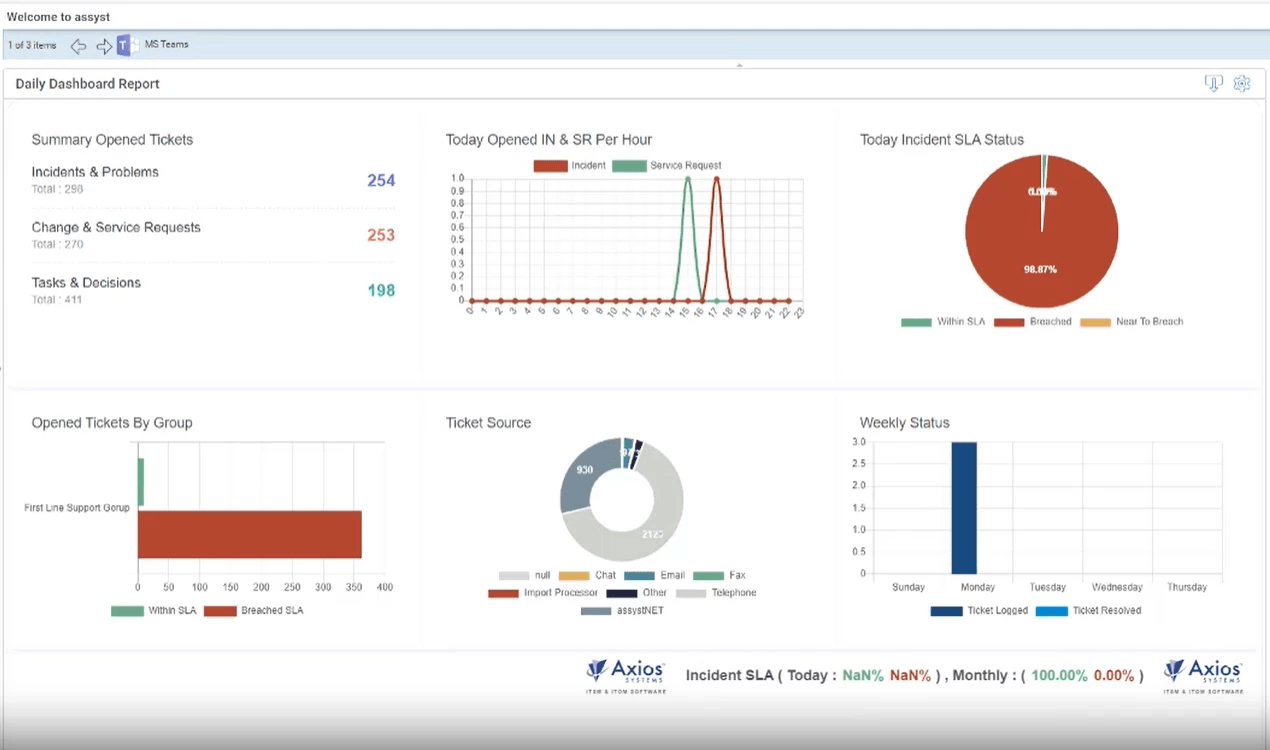
IFS Cloud is an enterprise platform designed for organisations managing complex manufacturing, supply chain, asset and service operations.
It provides capabilities across enterprise resource planning, manufacturing execution, enterprise asset management and industrial operations.
Key features:
Manufacturing planning and scheduling.
Supply chain management.
Production management.
Enterprise asset management.
Quality management.
Project management.
Manufacturing execution integration.
Enterprise reporting and analytics.
How does it help electronics manufacturers?
Large electronics manufacturers may operate multiple facilities, production lines and complex supplier networks.
IFS Cloud can help connect production, supply chain and asset management processes, providing a broader view of operational performance.
Its wider manufacturing capabilities can be relevant to organisations requiring advanced operational control and integration across multiple business functions.
Best suited for: Large electronics manufacturers, complex industrial businesses and organisations managing multiple manufacturing facilities.
Important consideration: Its enterprise-level functionality may be more extensive than smaller manufacturers require. Evaluate implementation complexity and total cost of ownership.
8. SYSPRO ERP
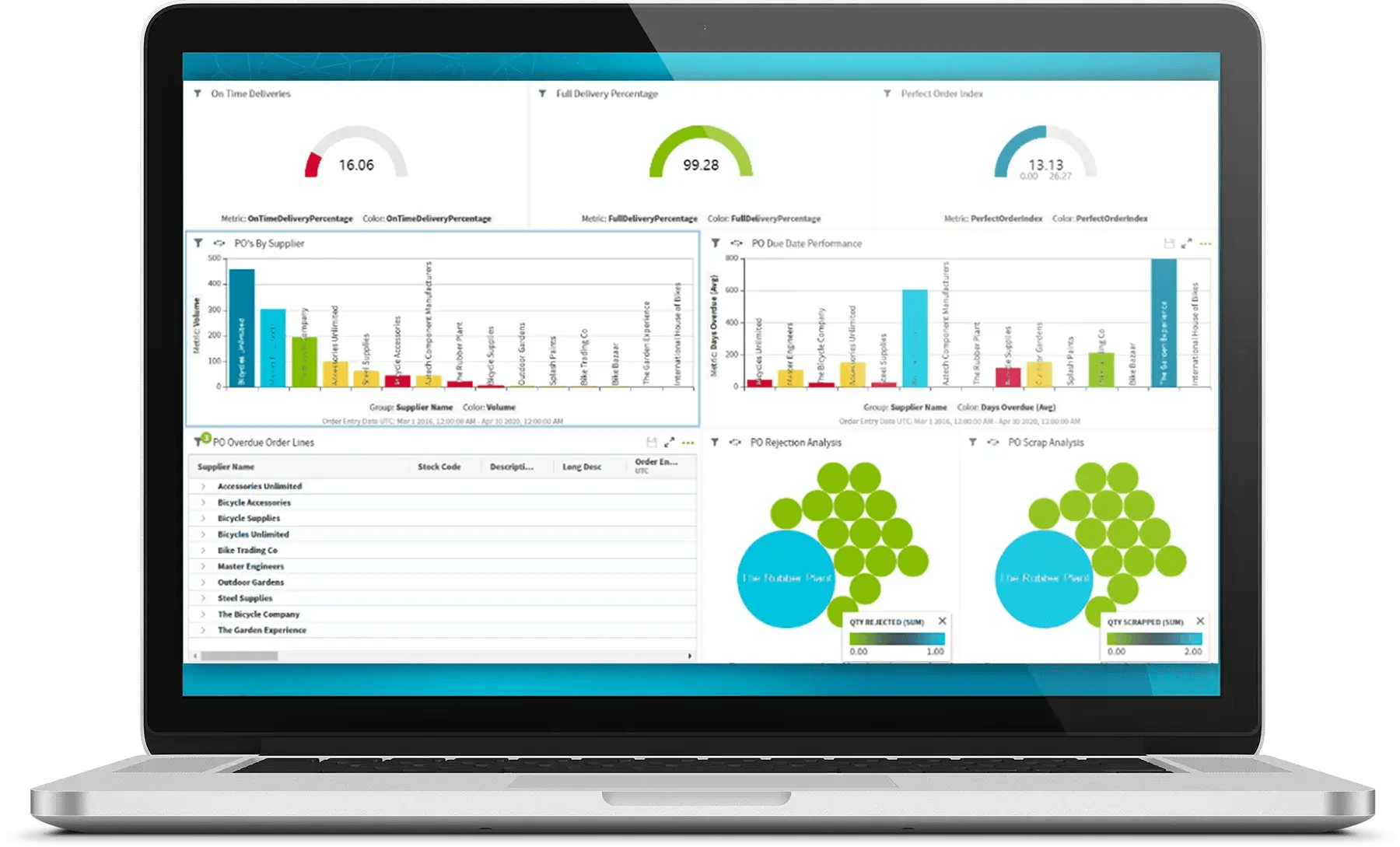
SYSPRO is an ERP platform focused on manufacturing and distribution businesses.
It offers capabilities for production management, inventory control, procurement, financial management and supply chain operations.
Electronics manufacturers can evaluate SYSPRO when they need an ERP system that supports component-based production and inventory management.
Key features:
Manufacturing and production management.
BOM and routing management.
Inventory control.
Material requirements planning.
Procurement management.
Quality management.
Lot and serial tracking.
Financial reporting.
How does it help electronics manufacturers?
SYSPRO helps manufacturers coordinate production requirements with inventory and purchasing activities.
For electronics businesses, this can support better component availability, production planning and finished goods management.
Its manufacturing focus makes it relevant to companies that want to connect operational and financial processes.
Best suited for: Small and mid-sized manufacturers, electronics assembly businesses and industrial equipment producers.
Important consideration: Confirm the precise manufacturing capabilities, available integrations and UK implementation support for your selected deployment.
9. Cetec ERP
Cetec ERP is a cloud-based ERP platform focused on manufacturing businesses, including electronics manufacturers and contract manufacturers.
It is worth considering for businesses looking for an integrated platform to manage production, inventory, purchasing and order fulfilment.
Key features:
Manufacturing and production management.
BOM and routing management.
Inventory management.
Work order management.
Purchasing and procurement.
Quality management.
Lot and serial traceability.
Financial and operational reporting.
How does it help electronics manufacturers?
Electronics manufacturers often need to manage component-level inventory, production orders and customer-specific assembly requirements.
Cetec ERP provides manufacturing-focused capabilities that can help coordinate these activities and improve visibility across production operations.
Best suited for: Electronics contract manufacturers, smaller manufacturing businesses and companies looking for a manufacturing-focused cloud ERP solution.
Important consideration: UK businesses should verify local implementation availability, support arrangements, accounting requirements and integration options before selecting the platform.
Why Do Electronics Manufacturers Need a Cloud ERP System?
Electronics manufacturers operate in an environment where product specifications, component availability and customer requirements can change frequently.
Traditional systems often create data silos between purchasing, inventory, production and finance. These disconnected processes make it harder to understand actual material requirements and manufacturing costs.
A cloud ERP for electronics manufacturing can help address these challenges by connecting business operations through a centralised platform.
Here are some important benefits.
1. Better Component and Inventory Management
Electronic products often contain hundreds or thousands of individual components. Managing these materials manually can create inventory inaccuracies and purchasing delays.
A cloud ERP system helps businesses monitor component availability, stock movements, purchasing requirements and warehouse inventory.
This gives production teams better visibility into the materials available for manufacturing.
2. Improved Production Planning
Production delays can occur when components are unavailable or production schedules are not aligned with actual material requirements.
Manufacturing ERP systems connect production planning with inventory and procurement data.
This helps businesses identify material shortages, organise production orders and make better use of available resources.
3. Greater Product Traceability
Electronics manufacturers may need to track components, batches and finished products throughout their supply chains.
ERP systems with appropriate lot and serial tracking capabilities can help businesses identify where materials were purchased, how they moved through production and which finished products contain specific components.
This is particularly important for quality investigations, customer requirements and product recalls.
4. Improved Financial and Production Visibility
Managing production costs separately from financial accounts makes it difficult to understand actual manufacturing profitability.
An integrated ERP system connects material consumption, purchasing, production costs and financial information.
Business leaders can use this information to review manufacturing expenses, monitor margins and make informed business decisions.
5. Easier Access to Business Information
Cloud-based ERP platforms provide access to business information through supported web and mobile interfaces.
This can help authorised employees access operational information across different locations without relying entirely on locally maintained systems.
Cloud deployment can also reduce the need for businesses to manage their own ERP infrastructure, depending on the chosen platform and hosting arrangement.
How to Choose the Right ERP for Electrical and Electronics Manufacturing
Selecting ERP for electrical and electronics manufacturing requires more than comparing software features.
The right solution should support your existing production processes while providing the flexibility to accommodate future business growth.
Consider the following factors before making a decision.
Manufacturing Requirements
Identify your manufacturing model before evaluating ERP systems.
Do you manufacture electronic components, assemble PCBs, produce electrical equipment or operate as a contract manufacturer?
Each manufacturing environment has different requirements. Your ERP system should support the production processes you actually use.
BOM and Engineering Change Management
Electronics manufacturers regularly introduce new product versions and update component specifications.
Look for ERP functionality that supports multi-level BOMs, BOM revisions, engineering changes and approved component alternatives.
Also check whether engineering systems such as CAD and PLM can integrate with the ERP platform.
Inventory and Component Traceability
Component availability can directly affect manufacturing schedules.
Evaluate inventory management, serial number tracking, lot tracking, warehouse management and supplier purchasing capabilities.
For businesses handling sensitive or regulated components, also consider supplier qualification and counterfeit component controls.
Production Planning and MRP
Your ERP should help calculate material requirements, plan production orders and identify potential shortages.
Check whether it supports your manufacturing approach, production capacity and scheduling requirements.
Quality Management
Quality control is particularly important in electronics manufacturing.
Evaluate whether the ERP can support inspection processes, non-conformance records, quality reporting and product traceability, either natively or through integrated applications.
Integration Capabilities
An ERP system should work with your existing business technology.
Consider integration with:
CAD and PLM applications.
Manufacturing Execution Systems (MES).
Warehouse Management Systems (WMS).
Power BI and reporting applications.
CRM and customer management systems.
E-commerce and supplier platforms.
Implementation Costs and Scalability
ERP costs depend on licensing, implementation scope, integrations, customisation, data migration, training and ongoing support.
Ask potential implementation partners for a detailed project estimate rather than comparing software subscription prices alone.
Choose a platform that meets your current requirements and can support your expected business growth.
Why Consider Dynamics 365 Business Central for Electronics Manufacturing?
Microsoft Dynamics 365 Business Central is worth considering for electronics manufacturers that want to connect finance, purchasing, inventory and production management.
Its manufacturing functionality is available through the Premium licensing experience and supports production BOMs, routings, work centres, machine centres and production orders.
For growing UK manufacturers, this provides a foundation for connecting manufacturing activities with wider business operations.
Here are some important capabilities:
Production BOM Management: Define the components and materials required to manufacture electronic products.
Production Order Management: Organise production activities and monitor material consumption, output and production progress.
Material Requirements Planning: Use supply planning to calculate material requirements and support purchasing and production decisions.
Inventory Management: Monitor component availability, stock movements and inventory levels.
Financial Management: Connect production and purchasing activities with financial reporting and cost management.
Microsoft Power BI: Connect business data with reporting and analytics to support operational decision-making.
Power Platform Integration: Extend business workflows using Power Apps and Power Automate, subject to integration requirements.
However, Business Central is not a dedicated electronics manufacturing execution or product lifecycle management platform. Businesses with advanced PCB production, SMT line control, complex engineering change processes or highly specialised quality requirements may need additional applications.
The right implementation approach should therefore be based on your manufacturing requirements rather than assuming that standard ERP functionality will cover every process.
How Dynamics Square UK Helps Electronics Manufacturers
Choosing the right ERP platform is only one part of a successful digital transformation project. Businesses also need an experienced implementation partner to understand their operational requirements, configure the system and support employees throughout the transition.
Dynamics Square UK helps businesses implement and optimise Microsoft Dynamics 365 solutions to improve business management, operational visibility and process efficiency.
For electronics and electrical manufacturing businesses considering Microsoft Dynamics 365 Business Central, Dynamics Square UK can help with:
ERP Consultation: Understand your current business processes and identify suitable ERP requirements.
Business Central Implementation: Plan and implement Microsoft Dynamics 365 Business Central around your business processes.
Manufacturing Configuration: Configure relevant production, BOM, inventory and purchasing functionality.
Data Migration: Plan the transfer of relevant business and operational data from existing systems.
System Integration: Connect Business Central with relevant Microsoft and third-party applications.
Training and Support: Help employees adopt the ERP system and provide ongoing technical assistance.
The implementation scope depends on your existing systems, manufacturing processes and required integrations.
If your business is planning to replace outdated manufacturing software, improve inventory management or connect production with financial operations, Dynamics Square UK can help you evaluate the right Microsoft Dynamics 365 approach.
Contact Dynamics Square UK to discuss your electronics manufacturing ERP requirements and explore how Business Central can support your business.
Final Thoughts
Selecting the right ERP for electronics manufacturing is an important decision for UK businesses looking to improve production efficiency, inventory control and financial visibility.
Platforms such as Epicor Kinetic, Infor CloudSuite Industrial, Sage X3 and IFS Cloud offer manufacturing-focused capabilities, while Dynamics 365 Business Central provides an integrated ERP foundation for growing businesses.
Before selecting a platform, evaluate your manufacturing processes, BOM requirements, component traceability, production planning needs and integration requirements.
For businesses looking to modernise their operations with Microsoft technology, Dynamics 365 Business Central is worth considering.
Contact Dynamics Square UK to discuss your ERP implementation requirements and find a suitable solution for your electronics manufacturing business.
Frequently Asked Questions
There are so many single ERP systems that is suitable for every electronics manufacturer. Business Central, Epicor Kinetic, Infor CloudSuite Industrial, Sage X3, SAP Business One and SYSPRO are among the platforms worth evaluating. The right choice depends on production complexity, inventory requirements, traceability, budget and integration needs.
Yes, Business Central can support many growing electronics manufacturers through its Premium manufacturing functionality. It provides production BOMs, routings, production orders, inventory management and supply planning. However, businesses requiring advanced electronics-specific manufacturing functionality may need additional applications or integrations.
An ERP for electrical and electronics manufacturing should support production planning, multi-level BOMs, inventory management, component traceability, procurement, quality management, production costing and financial reporting. Advanced manufacturers may also require engineering change management, MES and PLM integration.
Cloud ERP is hosted on cloud infrastructure and accessed through supported internet-connected devices. Traditional on-premises ERP is hosted and maintained within the organisation's own IT environment. Cloud ERP can reduce infrastructure management responsibilities and simplify access to business information, while deployment suitability depends on security, integration, performance and operational requirements.
ERP costs vary depending on the software, number of users, manufacturing complexity, implementation scope, integrations and support requirements. A smaller Business Central implementation may have a different cost structure from an enterprise manufacturing platform such as SAP or IFS. Businesses should request a tailored quotation covering software licences, implementation, data migration, training and ongoing support.
Yes, many manufacturing ERP systems support lot and serial number tracking, allowing businesses to monitor component movements and finished goods. However, the depth of traceability varies between platforms. Manufacturers should verify whether their chosen solution supports component-level genealogy and the traceability requirements of their production processes.
Cloud ERP can help electronics manufacturers connect production, inventory, procurement and finance in one system. It can improve access to operational information, support collaboration across locations and reduce the burden of maintaining on-premises infrastructure.