
FS Apps 10 to Microsoft Dynamics 365 Finance and Human Resources Implementation and Cloud Migration
How a Multi-Entity Engineering Business Built Financial Clarity and Operational Control with Microsoft Dynamics 365
A Crux of the Case Story
This case study reflects how a project-driven engineering organisation operating across multiple European entities transitioned from a legacy ERP environment to a unified, cloud-based system. Facing mounting operational complexity and the urgency to move away from an ageing shared instance, the business restructured its financial and HR operations into a connected platform. The result was improved efficiency, stronger financial control, and a scalable foundation built for continued regional expansion.
Business Overview
This organisation operates within a project-driven engineering environment, managing complex operations across multiple European regions. Its structure spans six legal entities, with plans already in place to expand to eight in the near future. Each entity contributes to a broader operational model that relies heavily on coordination across finance, projects, procurement, and workforce management.
As the business grew, so did the need for consistency and control across entities. Financial reporting, project costing, and intercompany transactions required alignment, while local compliance and operational nuances still needed to be preserved.
The organisation had been operating on a shared instance of a legacy ERP system. While this setup had supported earlier stages of growth, it began to create limitations as transaction volumes increased and operational complexity deepened.
With expansion underway and timelines defined for system retirement, the business reached a point where transformation was no longer optional. It became a necessary step to maintain operational continuity and support future growth.
To navigate this transition, the organisation partnered with Dynamics Square.
What are The
Business Challenges
The organisation faced a combination of operational and strategic challenges, many of which stemmed from reliance on its existing ERP environment.
What the Business Needed
To move forward, the organisation required a system that could unify operations while supporting the complexity of a multi-entity, project-driven business.
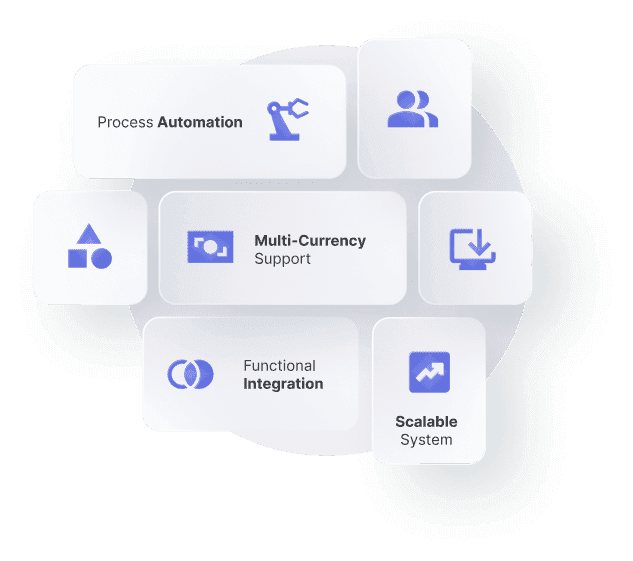
- A modern ERP platform to replace the existing legacy system
- Consolidation of operations across all European legal entities into a single environment
- Automation of high-volume processes across finance, HR, and project operations
- Multi-currency capabilities to support cross-border transactions
- Deep integration across functions including finance, procurement, projects, and workforce management
- A system designed for long-term scalability as additional entities are brought into scope
- Predictable operational and commercial outcomes following implementation
Business Objectives
The leadership team defined clear objectives to guide the transformation, focusing on both operational efficiency and long-term control.
Streamline processes by reducing manual effort across finance, project management, intercompany operations, and time and attendance
Strengthen financial accuracy through improved audit trails and real-time financial data
Create a unified financial view across all entities with automated consolidation
Support approximately 140 users across multiple regions within a scalable system
Ensure compliance with IFRS and European regulatory requirements
Protect sensitive data through role-based access controls
Enable real-time analytics and reporting to support informed decision-making
Solutions Proposed by Dynamics Square
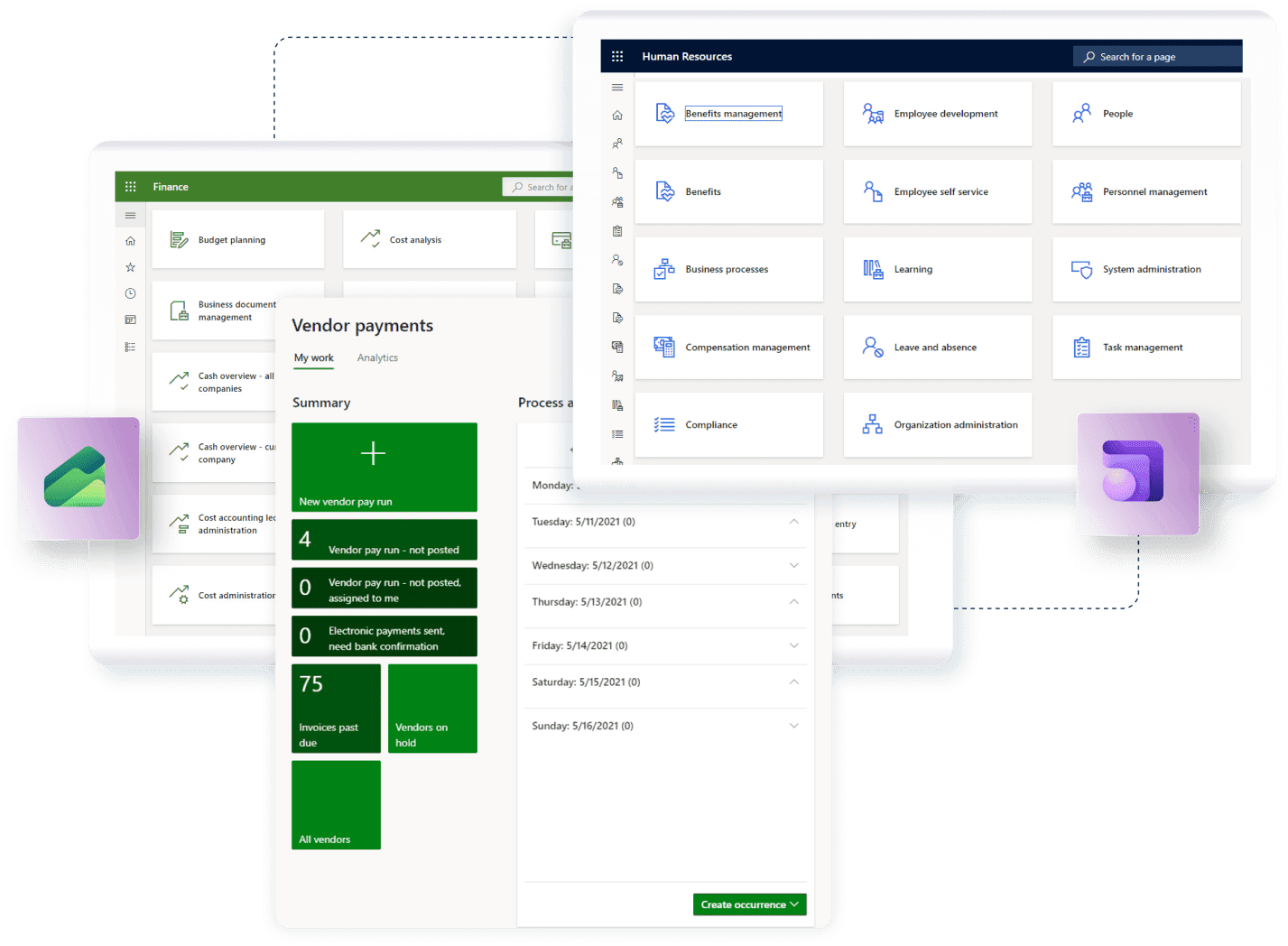
Dynamics Square designed a solution centred on creating a unified, cloud-based environment that connects finance and human resource operations across all entities.
Core ERP and HR Implementation
The proposed solution included:
- Microsoft Dynamics 365 Finance
- Microsoft Dynamics 365 Human Resources
These systems were selected to provide a strong foundation for financial management, project accounting, and workforce operations within a single ecosystem.
Financial Management and Core ERP Capabilities
- General Ledger with real-time updates
- Accounts Payable and Accounts Receivable processes
- Cash and Bank Management for improved liquidity control
- Fixed Assets management
- Budgeting and financial planning tools
- Automated financial consolidation across entities
Project and Operational Management
- Project Management and Accounting to support project-driven operations
- Procurement and inventory tracking aligned with project needs
- Improved visibility into project costing and financial performance
Human Resources and Workforce Management
- End-to-end HR process management
- Time and Attendance (T&A) integration
- Support for workforce planning and operational alignment
Implementation and Delivery Approach
The implementation was structured to ensure clarity, predictability, and minimal disruption.
- Combination of offsite and onsite delivery model
- Deployment of standard out-of-the-box modules to reduce complexity
- Structured implementation phases aligned with business priorities
- Milestone-based payment plan to ensure financial predictability
- Focus on delivering a stable and scalable system within defined timelines
Results and Impact: What This Transformation Means
The proposed transformation is expected to deliver measurable financial and operational benefits.
Total Economic Impact projected at $3.41 million over three years
System payback expected in less than one year
Reduction of approximately 10% in finance and operations hiring requirements
Improved efficiency through automation of high-volume processes
Enhanced financial visibility with real-time data and reporting
Stronger audit readiness supported by structured financial controls
A scalable system capable of supporting current operations and future expansion
Why This Case Matters and Future Prospects

Consult To Reveal Best Approach
Connect with us to facilitate your system to drive a parallel approach in the market you deal with. We help enterprises to implement their unique needs.