.png&w=3840&q=75&dpl=dpl_FeBXFurU8TV9Dsx5B4HYvrCjoi8q)

CRM for charities helps UK non-profit organisations manage donors, supporters, volunteers, fundraising campaigns, communications and reporting from a central system. The right charity CRM can reduce manual administration, improve donor engagement and give fundraising teams a clearer view of relationships and income.
For UK charities, the right choice depends on organisation size, fundraising model, budget and operational requirements. This guide compares leading CRM software for charities, explains the features to look for, and shows where Microsoft Dynamics 365 Sales can fit for organisations that need a scalable and customisable CRM.
Table of Contents
- Quick Answer: What is the Best CRM for Charities?
- What is a CRM for Charities?
- Why Do Charities Need CRM Software?
- Best CRM Software for Charities in the UK: 10 Options Compared
- Which CRM is Right for Your Charity?
- CRM for Small Charities: What Should You Look For?
- What Features Should a CRM for Charities Have?
- How Much Does CRM Software for Charities Cost?
- Why Charities Move from Spreadsheets to CRM Software
- Is Microsoft Dynamics 365 Sales a Good CRM for Charities?
- How to Implement a CRM for a Charity
- How Dynamics Square Helps Charities Choose and Implement CRM
- Conclusion: Choosing the Right CRM for Your Charity
- Frequently Asked Questions
Quick Answer: What is the Best CRM for Charities?
There is no single best CRM for charities. The right platform depends on the charity's size, fundraising model, budget and operational requirements. Specialist charity CRMs can be suitable for donor and fundraising management, while broader platforms such as Microsoft Dynamics 365 Sales can be a strong option for organisations that need scalability, customisation, automation and integration with the wider Microsoft ecosystem.
For small charities, ease of use and affordability are usually priorities. For larger or more complex organisations, reporting, automation, integrations, data management and scalability may be more important.
What is a CRM for Charities?
A CRM for charities is software designed to help non-profit organisations centralise and manage relationships with donors, supporters, volunteers, partners and other stakeholders. Instead of keeping information across spreadsheets, email inboxes and disconnected databases, a CRM provides one place to manage relationship data and interactions.
Depending on the platform, a charity CRM can support donor management, fundraising campaigns, communications, volunteer management, reporting, grant-related processes, automation and integrations with other business applications.
For UK charities, it is also important to consider requirements such as GDPR, consent management, Gift Aid processes, fundraising reporting and the ability to integrate with existing systems.
Why Do Charities Need CRM Software?
Charities use CRM software to improve donor management, fundraising visibility, communication and operational efficiency. As an organisation grows, managing supporter information manually becomes increasingly difficult and can lead to duplicate records, missed follow-ups, inconsistent reporting and limited visibility.
A centralised CRM can help charities:
Maintain a single view of donors and supporters
Track donations, pledges and supporter interactions
Manage fundraising campaigns
Automate repetitive communications and follow-ups
Manage volunteer and stakeholder information
Generate reports and dashboards
Improve data quality and governance
Connect CRM data with other business applications
For smaller organisations, the main benefit may be replacing spreadsheets with a structured database. For larger charities, the CRM can become part of a broader digital ecosystem supporting fundraising, operations, reporting and engagement.
Best CRM Software for Charities in the UK: 10 Options Compared
The best CRM system for charities depends on what the organisation needs the platform to achieve. A fundraising-led charity may prioritise donor management and Gift Aid, while a service-delivery charity may need case management, volunteer tracking and outcome reporting.
| CRM | Best For | Main Strength |
|---|---|---|
| Microsoft Dynamics 365 Sales | Growing and complex charities | Scalability, customisation and Microsoft ecosystem integration |
| Salesforce | Large organisations | Extensive customisation and ecosystem |
| Beacon | Fundraising-focused charities | Donor and fundraising management |
| Donorfy | Small and growing charities | Fundraising and supporter management |
| Access thankQ | Established charities | Fundraising and donor management |
| DonorPerfect | Fundraising organisations | Donor and fundraising workflows |
| Charitylog | Service-delivery charities | Case and beneficiary management |
| CiviCRM | Technical and budget-conscious organisations | Open-source flexibility |
| Zoho CRM | Small organisations | Affordability and automation |
| Pipedrive | Simple fundraising pipelines | Visual pipeline management |
1. Microsoft Dynamics 365 Sales
Best for: Growing and larger charities that need a scalable and customisable CRM.
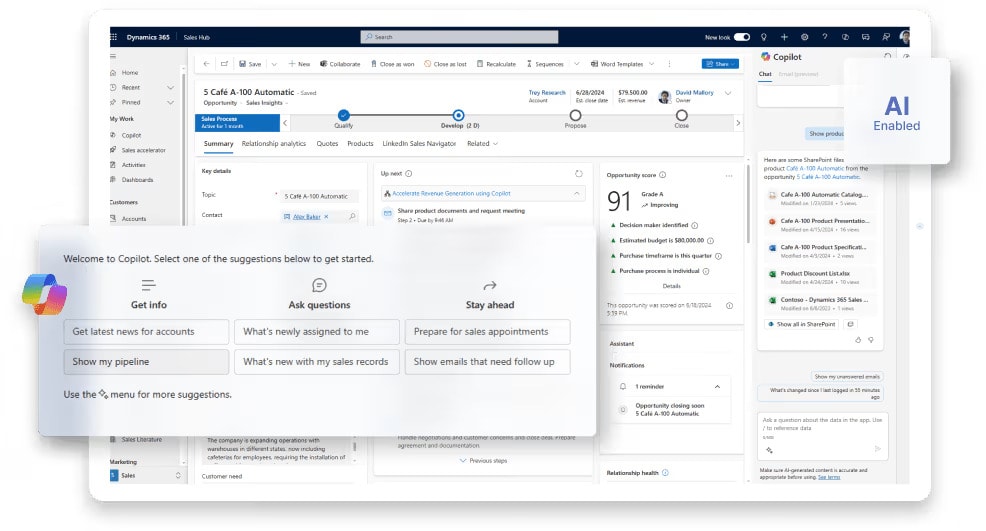
Microsoft Dynamics 365 Sales is a cloud-based CRM application that helps organisations manage relationships, interactions, activities and processes from a central platform. For charities, it can be configured around supporter and relationship management, communications, engagement workflows and reporting.
One of its major advantages is its connection with the wider Microsoft ecosystem. Organisations already using Microsoft 365, Power Platform, Power BI or other Microsoft technologies can create an integrated technology environment around their CRM.
For charities with more complex requirements, the platform can be extended and customised rather than forcing the organisation to work around a rigid CRM structure.
Centralise supporter and relationship data
Track interactions and activities
Automate workflows and follow-ups
Build custom dashboards and reports
Integrate with Microsoft technologies
Support complex organisational processes
Scale as the organisation grows
Important Microsoft update: Microsoft's older Fundraising and Engagement solution is being retired, with support ending on 31 December 2026. Charities evaluating Microsoft technology should therefore assess the current Microsoft nonprofit ecosystem and the specific CRM, fundraising and operational capabilities they need rather than assuming Fundraising and Engagement is the long-term product direction.
For organisations that need more than a standalone CRM, Microsoft solutions can also be considered alongside Microsoft Dynamics 365 and other Microsoft business applications.
2. Salesforce
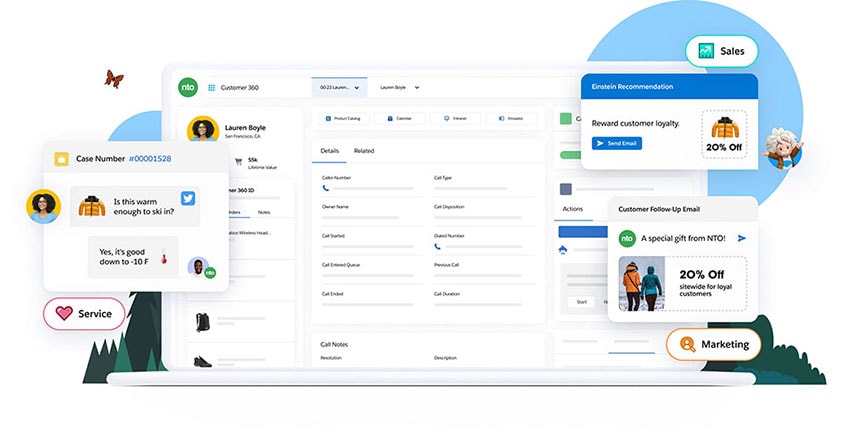
Best for: Larger charities with complex CRM requirements and resources for implementation and ongoing administration.
Salesforce is a widely used CRM platform that can be configured for nonprofit organisations. Its broad ecosystem and extensive customisation options make it suitable for organisations with complex requirements, multiple teams and advanced integration needs.
However, charities should consider implementation complexity, administration requirements, integrations and total cost of ownership before selecting an enterprise CRM.
3. Beacon
Best for: UK charities where fundraising and donor management are core requirements.
Beacon is a charity-focused CRM designed around fundraising and supporter management. Its charity-specific approach can make it attractive to organisations that want functionality aligned closely with fundraising workflows rather than adapting a general-purpose CRM.
Charities should assess its fundraising, communication, reporting and integration capabilities against their specific operational requirements.
4. Donorfy
Best for: Small and growing charities that need fundraising and supporter management.
Donorfy is a CRM platform focused on charities and fundraising organisations. It can help teams centralise donor information, manage fundraising activities and connect supporter data with other tools.
For smaller charities, ease of use, available integrations, reporting and the total cost of ownership should all be considered before making a decision.
5. Access thankQ
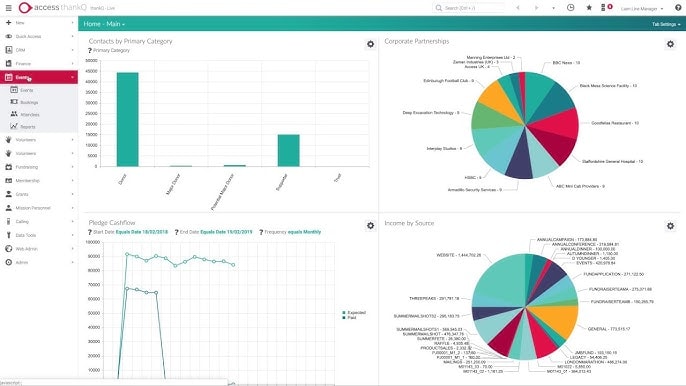
Best for: Established charities looking for fundraising and donor management capabilities.
Access thankQ is a charity-focused CRM solution designed to help organisations manage fundraising, donors, communications and related activities. Its functionality can be useful for charities that need a dedicated system for managing supporter relationships and fundraising operations.
Before choosing the platform, charities should assess its reporting, integrations, workflow capabilities and suitability for their future requirements.
6. DonorPerfect

Best for: Organisations with a strong focus on donor and fundraising management.
DonorPerfect is a fundraising CRM designed for nonprofit organisations. It provides functionality around donor records, donations, fundraising activities, reporting and communications.
It can be considered by organisations looking for a dedicated fundraising CRM rather than a broader enterprise business platform.
7. Charitylog
Best for: Charities focused on service delivery, case management and beneficiary support.
Charitylog is designed around charity service delivery and case management. For organisations whose primary activity involves supporting beneficiaries rather than simply managing donors, case records, referrals, outcomes and service information can be more important than traditional sales-style CRM functionality.
This makes it worth considering for charities where beneficiary and service management are central to day-to-day operations.
8. CiviCRM
Best for: Charities with technical resources looking for an open-source CRM.
CiviCRM is an open-source CRM platform designed for non-profits, charities and membership organisations. It can provide considerable flexibility, but organisations should factor in hosting, configuration, technical support, maintenance and implementation requirements.
It can be particularly relevant for organisations that have access to technical expertise and want greater control over their CRM environment.
9. Zoho CRM
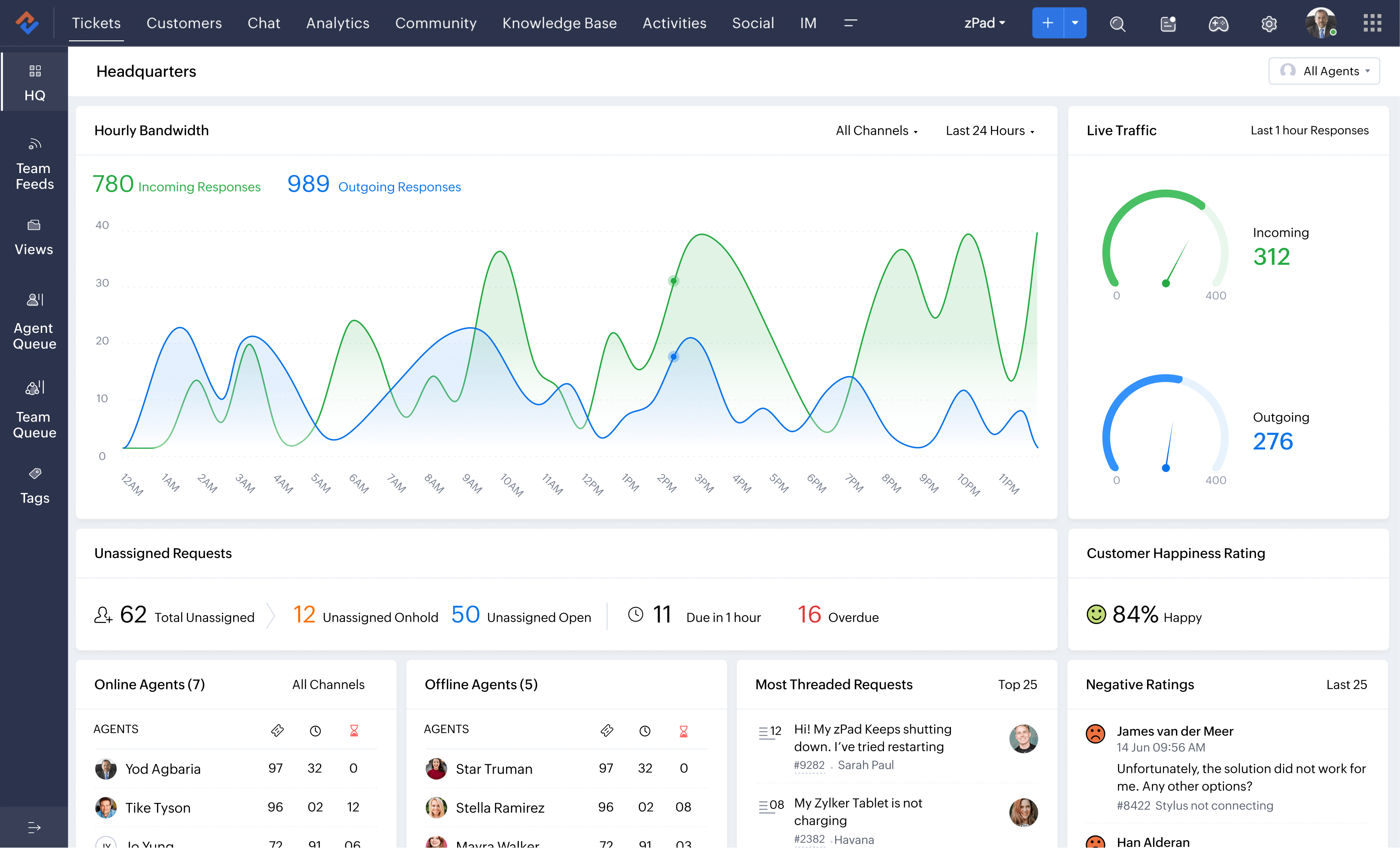
Best for: Small charities looking for a general-purpose CRM with automation capabilities.
Zoho CRM is a general-purpose CRM that can be configured for different organisational requirements. Its automation, contact management, reporting and customisation capabilities can make it suitable for smaller organisations that do not necessarily need a specialist fundraising CRM.
However, charities should check whether the platform natively supports the fundraising-specific processes they require or whether additional configuration and integrations will be needed.
10. Pipedrive
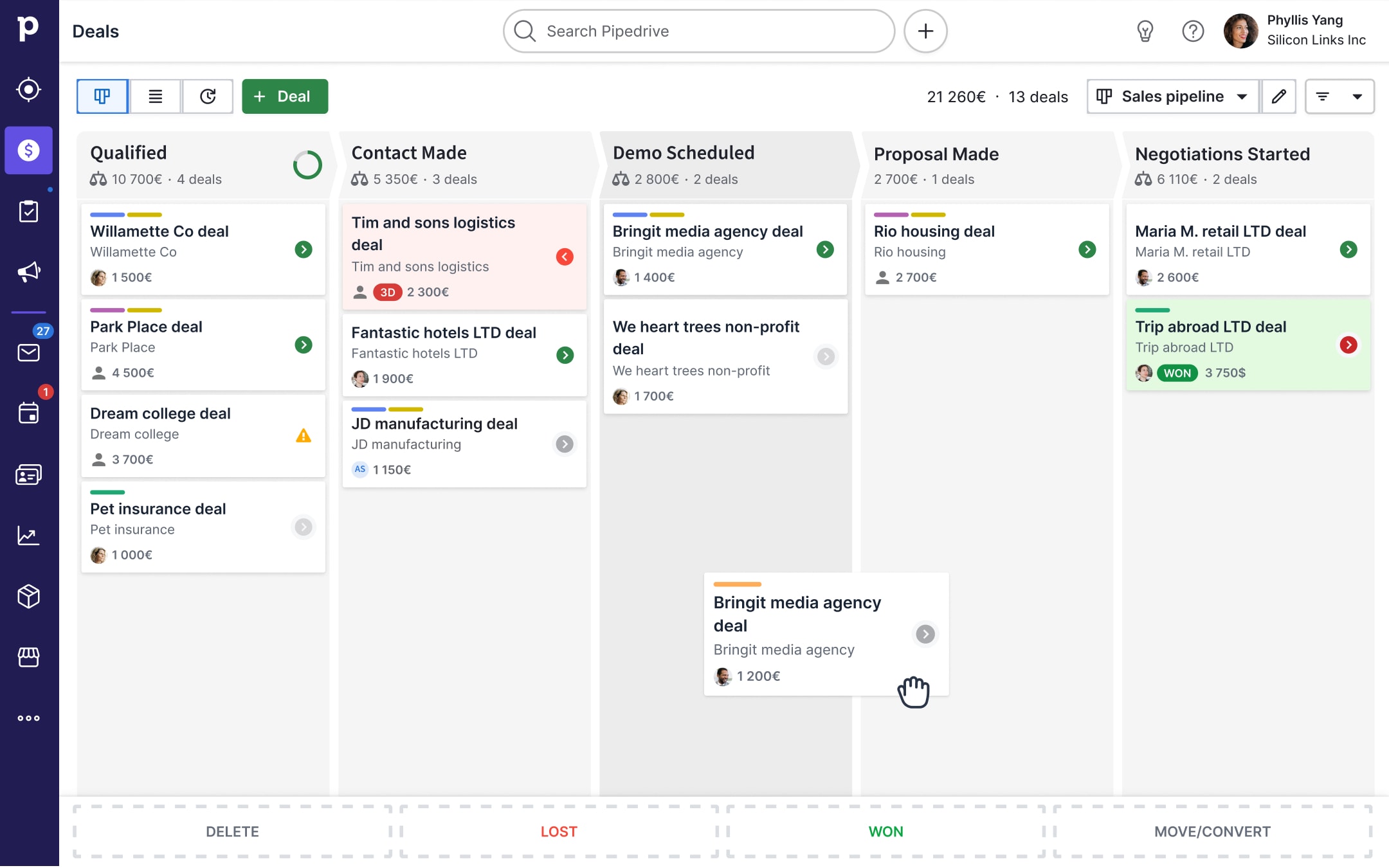
Best for: Charities that need a simple and visual pipeline for fundraising or partnership activities.
Pipedrive is primarily designed around pipeline and activity management. Although it is not a dedicated charity CRM, its visual approach can be useful for organisations managing fundraising opportunities, partnership pipelines or structured outreach activities.
Charities with complex donor management, Gift Aid, volunteer or beneficiary requirements may need additional systems or integrations.
Which CRM is Right for Your Charity?
The right CRM depends on your charity's primary objective. A fundraising organisation has different requirements from a charity focused on service delivery, volunteering or grantmaking.
| Charity Requirement | CRM Approach to Consider |
|---|---|
| Small charity with basic donor management | Simple or specialist charity CRM |
| Fundraising-led charity | Fundraising-focused CRM such as Beacon or Donorfy |
| Large organisation with complex processes | Scalable CRM such as Dynamics 365 Sales or Salesforce |
| Service delivery and beneficiary management | Case-management-focused CRM |
| Microsoft technology ecosystem | Microsoft Dynamics 365 Sales |
| Technical team and open-source preference | CiviCRM |
CRM for Small Charities: What Should You Look For?
A CRM for small charities should be affordable, easy to use and simple enough for employees and volunteers to manage without extensive technical knowledge. Buying the most powerful platform available is not always the right decision.
Small charities should first identify their essential requirements, such as:
Contact and donor management
Donation and fundraising tracking
GDPR and consent management
Basic reporting and dashboards
Email and communication management
Volunteer information
Integration with existing tools
Simple onboarding and training
It is also important to calculate the total cost of ownership. A low monthly licence fee can become expensive if the system requires significant implementation, customisation, data migration or technical support.
What Features Should a CRM for Charities Have?
A good charity CRM should support the complete relationship lifecycle, from capturing supporter information to managing communications, donations, engagement and reporting.
1. Donor and Supporter Management
The CRM should provide a centralised view of donors, supporters, organisations and their interactions. Teams should be able to understand previous communications, donations and engagement without searching through multiple systems.
2. Donation and Gift Management
Charities should be able to record donations, pledges, recurring gifts and relevant payment information. The exact functionality required will depend on the charity's fundraising model and connected payment platforms.
3. Fundraising Campaign Management
A CRM system for charities should help fundraising teams manage campaigns, track engagement and understand which activities generate results.
4. Gift Aid and UK Fundraising Requirements
UK charities should check how each CRM handles Gift Aid-related workflows, donor declarations and reporting requirements. Do not assume that a general-purpose CRM will provide every UK-specific fundraising capability natively.
5. Volunteer Management
For volunteer-led organisations, the CRM should help manage volunteer records, activities, communications, availability and engagement where required.
6. Grant and Programme Management
Charities involved in grants should consider whether they need to track grant applications, awards, recipients, programmes, reporting requirements and related communications.
7. Reporting and Analytics
Reporting allows management and trustees to understand fundraising performance, donor engagement, campaign activity and operational outcomes. Advanced organisations may also require integration with analytics platforms such as Power BI.
8. Automation
Automating reminders, follow-ups, communications and repetitive workflows can reduce administrative work and allow charity teams to spend more time on fundraising and service delivery.
9. GDPR and Consent Management
Charities manage personal information about donors, volunteers, beneficiaries and supporters. Data permissions, consent, security and governance should therefore be considered when evaluating CRM software for charities.
10. Integrations
Check whether the CRM can connect with the applications your charity already uses, such as email marketing platforms, payment systems, accounting software, websites, event platforms and analytics tools.
How Much Does CRM Software for Charities Cost?
There is no standard price for charity CRM software. Costs vary according to the platform, number of users or contacts, features, integrations and implementation requirements.
When comparing CRM costs, charities should consider:
Software licensing
Number of users and contacts
Data migration
CRM configuration
Integrations
Training
Technical support
Ongoing administration
For a small charity, a low-cost specialist CRM may be sufficient. A larger organisation may benefit from investing in a scalable platform if it needs complex workflows, reporting, integrations and multiple departments working from shared data.
Why Charities Move from Spreadsheets to CRM Software
Spreadsheets can work for a very small charity, but they become difficult to manage as donor, supporter and operational data grows.
Common problems include:
Duplicate donor records
Outdated contact information
Limited visibility of donor history
Manual follow-ups
Difficulty tracking campaigns
Time-consuming reporting
Multiple versions of the same data
Limited collaboration between teams
A central CRM can provide controlled access to shared information while creating a more structured environment for fundraising, relationship management and reporting.
Is Microsoft Dynamics 365 Sales a Good CRM for Charities?
Yes, Microsoft Dynamics 365 Sales can be a strong CRM option for charities that need scalability, customisation, automation and integration with Microsoft technologies. It is particularly relevant when a charity has requirements that go beyond basic donor database management.
For example, an organisation already using Microsoft 365, Power Platform or Power BI may benefit from building its CRM strategy around the Microsoft ecosystem.
However, a smaller charity with straightforward fundraising requirements may find a specialist charity CRM easier to deploy and manage. The decision should therefore be based on organisational requirements rather than choosing the most feature-rich platform.
To understand how Microsoft CRM can be adapted to organisational requirements, explore Microsoft Dynamics 365 CRM solutions.
How to Implement a CRM for a Charity
A successful charity CRM implementation starts with requirements and data rather than software selection alone.
Define your requirements: Identify donor, fundraising, volunteer, beneficiary, reporting and communication requirements.
Audit existing data: Review spreadsheets, databases and disconnected systems.
Clean your data: Remove duplicates and standardise contact information before migration.
Select the CRM: Compare functionality, scalability, integrations, usability and total cost of ownership.
Configure workflows: Set up fundraising, communications, reporting and automation processes.
Integrate existing systems: Connect the CRM with relevant financial, marketing, payment and reporting platforms.
Train users: Provide role-based training for employees, fundraising teams and volunteers.
Measure performance: Monitor adoption, data quality, reporting efficiency and operational improvements.
How Dynamics Square Helps Charities Choose and Implement CRM
Charities can have very different requirements depending on their size, fundraising model and service-delivery activities. A CRM that works well for a small fundraising organisation may not be appropriate for a larger charity with multiple departments and complex reporting requirements.
Dynamics Square can help organisations assess their CRM requirements, design appropriate workflows and implement Microsoft Dynamics solutions around their operational needs.
Our approach can cover areas such as CRM configuration, data migration, integrations, automation, reporting, training and ongoing support.
If your organisation is considering Microsoft Dynamics 365, you can also explore Microsoft Dynamics solutions for non-profit organisations.
Looking for the Right CRM for Your Charity?
Dynamics Square UK can help you choose and implement the right CRM to streamline donor management, improve fundraising and strengthen supporter relationships.
See Also: What is the Best Accounting Software for Charities?
Conclusion: Choosing the Right CRM for Your Charity
Choosing the right CRM for charities is less about finding a platform with the longest feature list and more about matching the system to your organisation's actual requirements.
Small charities may prioritise affordability and ease of use, while larger organisations may need advanced automation, reporting, integrations and scalability. Fundraising-focused organisations should assess donor and campaign management, while service-delivery charities may need stronger case and beneficiary management.
Before making a decision, evaluate the CRM against your current processes, future growth, data requirements, integrations, budget and internal resources. A well-planned CRM implementation can give your team better visibility, reduce manual administration and create a stronger foundation for long-term supporter and organisational management.
If you are considering Microsoft Dynamics 365 Sales for your charity, speak with Dynamics Square to discuss your requirements and implementation options.
Frequently Asked Questions
A CRM for charities is software that helps non-profit organisations manage donors, supporters, volunteers, communications, fundraising activities and related relationships in one central system.
The best CRM depends on the charity's size, fundraising model and operational requirements. Specialist platforms may be suitable for fundraising-focused organisations, while Microsoft Dynamics 365 Sales or Salesforce can be considered by larger organisations that need scalability and extensive customisation.
The best CRM for small charities is usually one that is affordable, easy to use and provides the core donor, communication and reporting features the organisation actually needs. Small charities should also consider implementation, training and ongoing support costs.
Charities use both specialist charity CRMs and general-purpose CRM platforms. Common options include Beacon, Donorfy, Access thankQ, Salesforce, Microsoft Dynamics 365 Sales, CiviCRM and other platforms depending on the organisation's requirements.
Yes. Microsoft Dynamics 365 Sales can be configured for charity relationship-management requirements. It can be particularly useful for organisations that need a scalable CRM and already use Microsoft technologies across their business.
A charity CRM should typically provide contact and donor management, fundraising tracking, communications, reporting, automation, consent management and integrations. Depending on the organisation, volunteer, grant and case management may also be required.
A CRM can be worthwhile when a charity is spending significant time managing donors, supporters, fundraising activities or reporting across spreadsheets and disconnected systems. The value depends on whether the CRM reduces administration and improves visibility of relationships and activities.
Charity CRM costs vary depending on the platform, number of users or contacts, functionality and implementation requirements. Charities should consider licensing, migration, configuration, training, integrations and ongoing support when calculating total cost.
A specialist charity CRM is generally designed around non-profit requirements such as donor management, fundraising, supporter engagement, Gift Aid or volunteer management. A general-purpose CRM may offer broader customisation and integration capabilities but could require additional configuration to support charity-specific workflows.
A specialist CRM may be appropriate when fundraising and donor management are the primary requirements. Microsoft Dynamics 365 Sales can be more suitable when the organisation needs a scalable and customisable CRM connected with a broader Microsoft technology environment.